
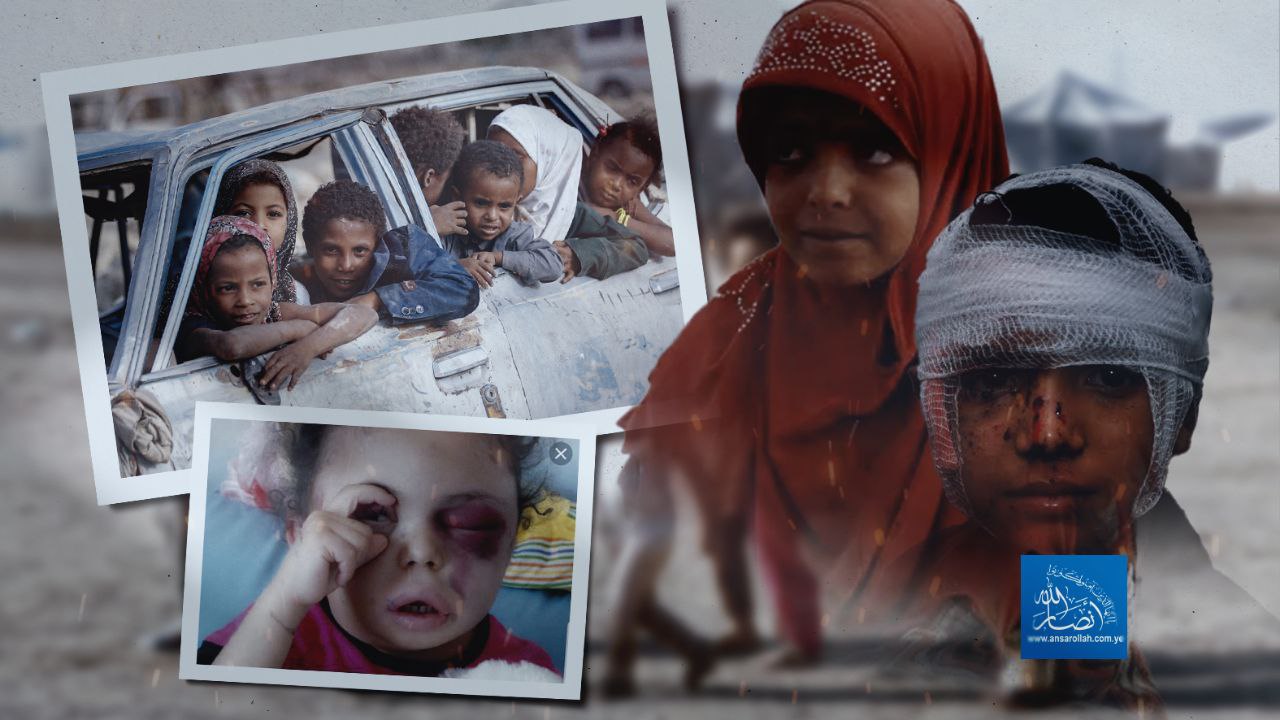
Published: Jumada I 30, 1447 AH
The International Day for Children has once again arrived only to expose the failures of what is commonly called the “international system,” highlighting the deep hypocrisy that continues to shape global responses to humanitarian crises. Yesterday, International Children's Day was overshadowed by the shameful events in Yemen and Gaza, where international law, conventions, and principles have been buried by the Zionists—Americans, Israelis, and their followers—along with tens of thousands of martyrs, including women, children, and the elderly, under the rubble of widespread destruction and devastation.
A Day Meant for Rights Becomes a Reminder of Their Absence
In Yemen and Gaza, the starkest evidence of the absence of justice and fairness is on full display. While Western societies work to improve the welfare of their children, children in Yemen and Gaza face a harsh reality. Many abandon school to support their families, and many others are killed by Zionist hatred, regardless of whether that hatred is Western or Arab, while others are left immobilized, their bodies torn apart by bombs and missiles. This has become the defining image of childhood in both regions on the very day meant to honor and protect them.
The International Day for the Rights of the Child was never intended to be a festive celebration. Its purpose is to evaluate children’s access to their natural rights around the world and to identify and bridge vast disparities. Yet today, this purpose has collapsed. Children in the Third World endure worsening conditions as a result of global hypocrisy and the selective application of humanitarian principles. For many Western governments, the rights they champion do not apply to children in Arab and Muslim nations.
Yemen: A Decade of War and Blockade
In Yemen, local and international human rights reports continue to show a disturbing level of global insensitivity. The world’s assessment of human rights—especially children’s rights—has increasingly been shaped by a narrow, U.S.-centric viewpoint, one that has rarely served as an ethical or legal standard.
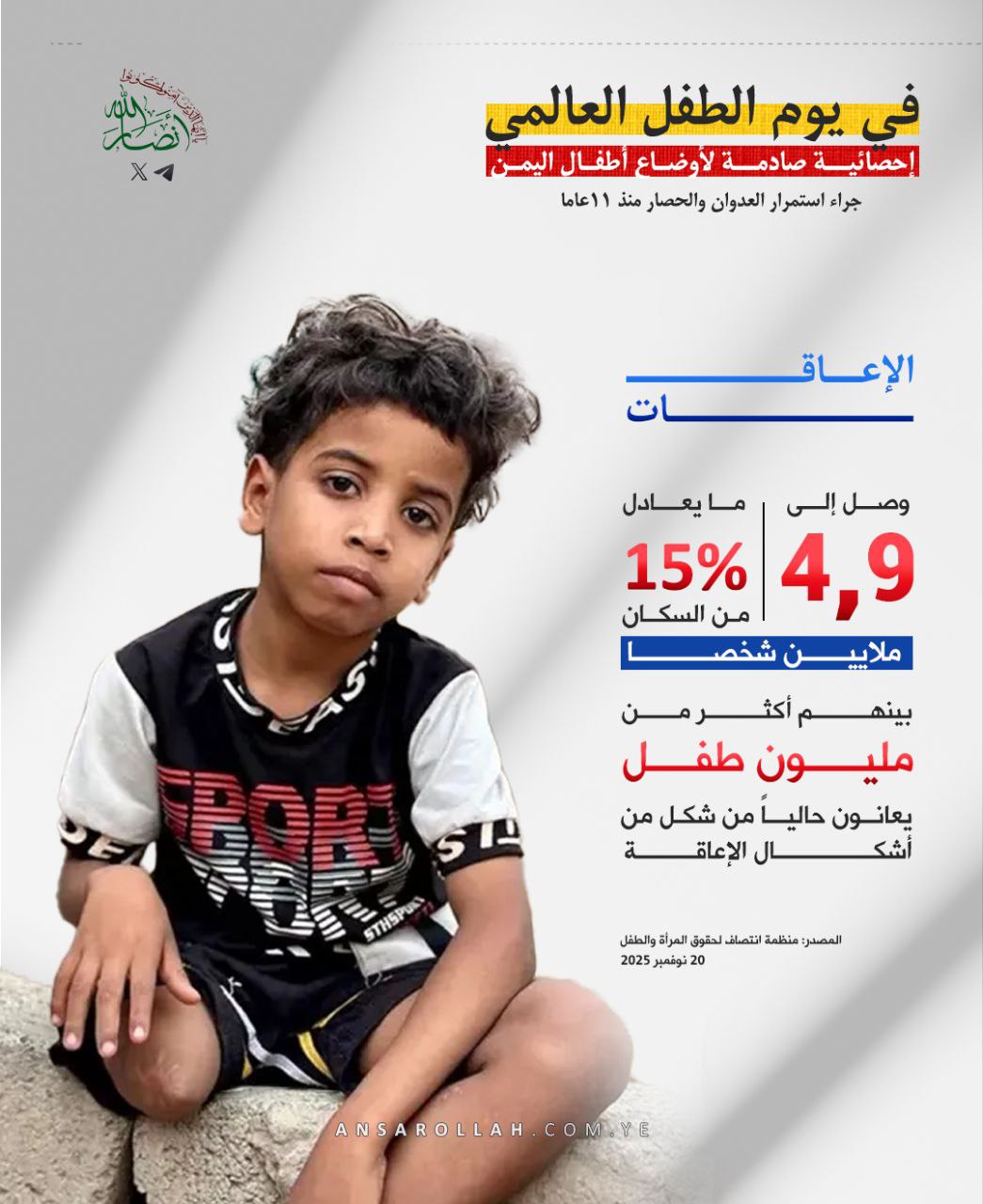
A recent report by the rights organization Entesaf placed full responsibility for crimes against Yemeni children and the humanitarian disaster squarely on what it described as the U.S.-Saudi-Israeli coalition. The organization revealed the repercussions of the aggression and siege on children, highlighting a reality that undermines all the slogans and titles that claimed to protect children’s rights to live a normal, healthy life.

-
4,232 children were killed and 6,346 were injured over the last 11 years.
-
More than one million children living with disabilities, directly linked to attacks and the collapse of the health system.
-
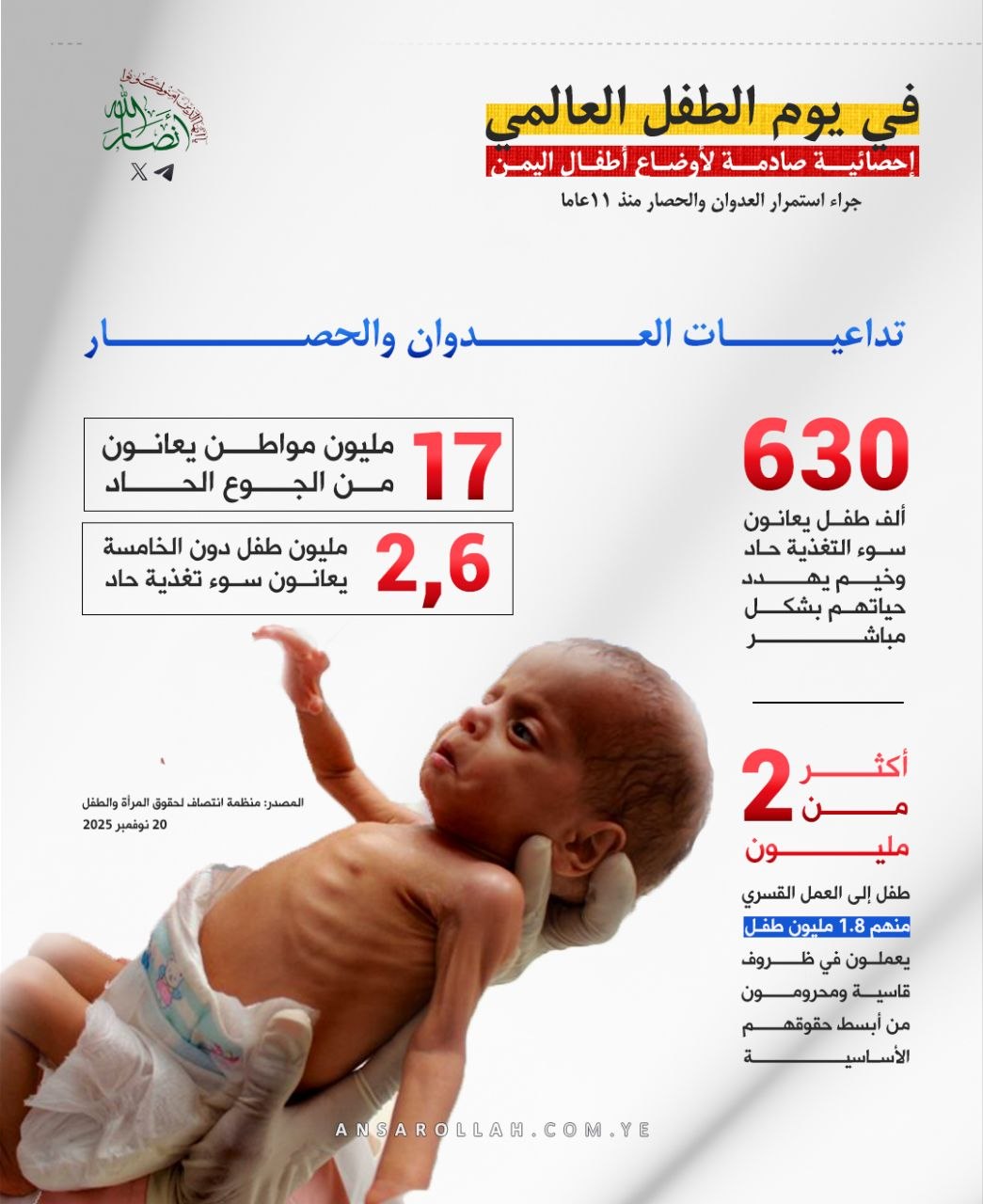
2.6 million children under five are suffering from acute malnutrition, including 630,000 facing life-threatening severe acute malnutrition.
-
2.1 million children are forced into labor, forming 35% of all children aged 5–17.
-
1.8 million children are working in harsh, exploitative conditions and are deprived of basic rights.
-
Nine out of ten children in displacement camps that lack access to essential needs, including food, water, and education.
-
1.9 million displaced children are still deprived of basic services, with over 700,000 unable to access formal schooling.
-
These devastating conditions are the result shaped by a decade of aggression and siege against the Yemeni people.
.jpg)
Gaza: Children Dying of Hunger and Bombardment
Gaza’s children remain a stain on the conscience of the world. Children continue to die from the Zionist enemy's bombardment or starvation caused by the blockade. Others endure lifelong disabilities or struggle to survive harsh weather without adequate shelter, exceeding the capacity of their fragile bodies. For two years, Zionist forces, backed by U.S. support, have targeted children in one of the world’s smallest and most densely populated regions, effectively destroying or disabling an entire generation, which is their goal.
According to the narrative, Israeli and American actions reflect desperation in their long-standing attempt to crush the Palestinian spirit and resistance. Yet Palestinian resilience persists. Meanwhile, the brutality inflicted on children in Gaza showcases a global moral collapse: the world remains unmoved by images of children dying from hunger, undergoing amputations without anesthesia, or sleeping outdoors amid sewage in freezing temperatures.
A number of young children—infants and toddlers—have recently died from starvation or bombardment. Their skeletal bodies were shown on international media, eliciting statements of “shock” from Western officials. But these reactions never translated into meaningful action to protect other children from meeting the same fate.
Global Principles Buried Under Rubble
On the morning of November 20, the International Day for Children served as yet another reminder of the failure of international organizations responsible for child welfare. They neither acted to stop the ongoing crises nor demanded concrete steps to prevent U.S. and Zionist military policies from endangering children in Yemen and Gaza.
In Gaza, Zionist forces continued genocidal attacks and starvation policies even on the day meant to honor children. Children slept in the open on the rubble of their destroyed homes, wrapped in torn tent cloths for warmth. The region has been reduced to ruins, with 88% of all homes destroyed by Zionist bombardment.
A Global System in Moral Freefall
Once again, the International Day for the Rights of the Child exposed the collapse of global legal and moral frameworks. What the world agreed upon as universal principles appears not to apply universally. As the suffering of children grows, global double standards become more apparent.
In Yemen, children continue to face the devastating impact of a suffocating economic blockade and the near-total collapse of human rights protections. They grow up fully aware that they are victims of a global system governed by selective humanitarianism.
More than a decade of violations in Yemen has passed without meaningful international intervention. The world has yet to acknowledge that the crisis demands decisive action—action that would restore Yemeni sovereignty and stability, and would eliminate a persistent flashpoint that threatens regional and global security.


