
Ansarollah Website Official Report
Published: Jumada II 2, 1447 AH
The Red Sea has long served as a historical barometer—revealing who truly holds the initiative and who leans more on the noise of power than its actual substance. In a decisive moment of clashing wills, Yemen has redrawn the equations of the sea with a firmness that has shaken the pillars of maritime dominance once assumed by Washington to be eternal.
In recent years, the world has appeared to shift from its maritime edges. The wave that surged from Sana’a amounted to a bold declaration heralding the rise of a new force—one that dismantles the American myth piece by piece and exposes the fragility of the “empire” in its most delicate joints: the resilience and effectiveness of the technology when the adversary is capable of innovating from the heart of necessity.
With every new Western report—from military research centers to strategic institutes—it is becoming clear that the battle has transformed into a battle of vision, turning geography into a platform of power. Thus Yemen, once viewed as the weakest link, has become a solid knot in Washington’s throat: an adversary redefining the meaning of confrontation and imposing upon the United States a review of maritime theories that had stood untouched for decades.
Today, as U.S. Navy reports acknowledge Yemeni superiority in naval innovation and decision-making centers warn of the failure of dominance in the Red Sea, the recognition is far from flattery. It stems from the necessity of understanding defeat before it repeats itself more severely, and from grasping that the era of linear wars has ended. Washington’s new adversaries do not fight with astronomical budgets, but with steadfast doctrine, ingenuity, long-term endurance, and a conviction that redefines the very meaning of deterrence.
This report opens a broad window onto the strategic transformation imposed by Yemen—by sea, land, and politics. Through a series of international observations and testimonies, with each marking a turning point, reshaping the balance of power from the Red Sea to the Indian Ocean. Rich in precise military detail, it also carries profound implications: the end of an era and the beginning of another, in which empires retreat when their capacity to protect the arteries of their power fractures, and advance is granted instead to those who read the battle well and craft it on their own terms.
Thus, the Red Sea stands today as an exposing mirror: the shine of traditional power dims, while the brilliance of the Yemeni fighter—who has tamed the sea as an ally—intensifies, forcing the world to recognize that willpower can topple what neither nuclear arsenals nor aircraft carriers can.
Yemen’s Army: Among the World’s Most Innovative
In a new official acknowledgment reflecting a fundamental shift in naval power dynamics, the U.S. Naval Institute confirmed that Yemeni armed forces have become among the most innovative and effective naval actors on the global stage.
A recent military report asserted that the Yemeni army—despite lacking a conventional fleet—managed to establish itself as the most active and inventive naval force through a series of intelligent operations that unsettled America’s technological superiority.
The report urged the Pentagon to launch an urgent initiative titled “Test in the Red Sea,” centered on deploying unmanned surface vessels (USVs) to counter Yemeni threats, aiming to reduce costs, limit human risk, and accelerate military innovation.
It noted that America has spent more than one billion dollars in failed attempts to impose its maritime dominance, without managing to contain Yemeni attacks marked by high tactical flexibility and exceptional adaptability.
This assessment follows a series of embarrassing military setbacks for U.S. fleets over 18 months of confrontation with Yemen’s naval power—setbacks culminating in a strategic victory for Sana’a and the transformation of the Red Sea from a “safe shipping corridor” into an “actual battlefield.” According to the report, this shift compels a radical U.S. revision of maritime strategy, as the region can no longer be treated as a routine passageway but as a decisive test of American capability against an adversary able to impose strategic imbalance at the heart of vital waterways.
The report further pointed to Washington’s potential attempt to use this “new reality” as an opportunity to test advanced naval weapons and technologies—as seen in Ukraine—possibly involving regional states such as Egypt and Saudi Arabia under the banner of “maritime security,” despite the failure of previous initiatives like “Operation Prosperity Guardian.”
It concluded with a clear warning: Yemen’s naval force is no longer a local threat but a consequential factor in redefining maritime domination in the coming decade, placing the United States at a strategic crossroads that may reorder its priorities in both the Red Sea and Indian Ocean.

Yemen: The Strongest Link in the Trump Administration’s Calculus
Given the setbacks suffered by the United States in its conflict with the Yemeni front, Washington’s decision-making circles now consider Yemen the strongest link among its adversaries. All options have failed to dissuade Yemen from bolstering its military capabilities, rendering the task “the most difficult” of all.
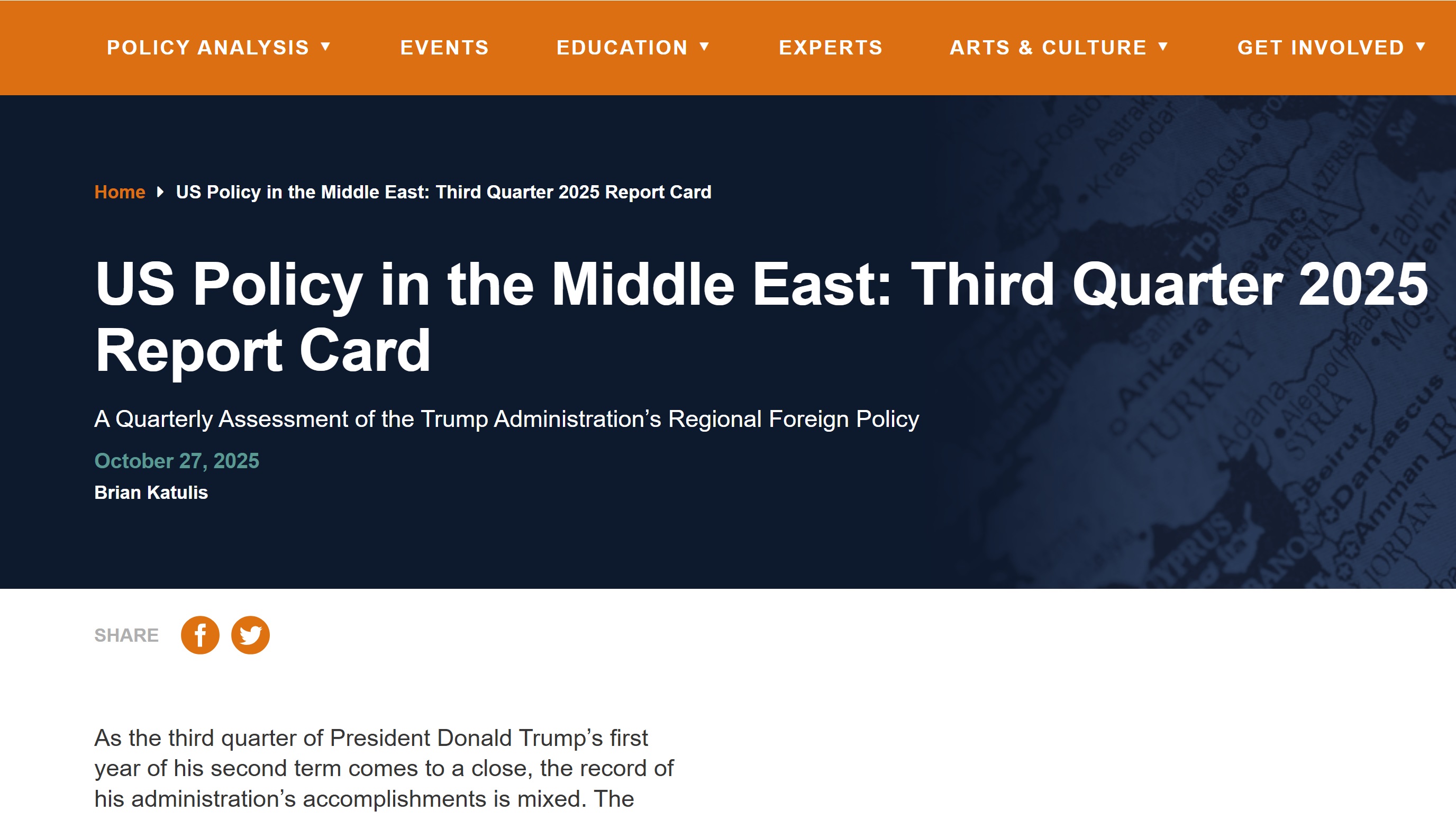
In a report on U.S. policy during the third quarter of this year, published at the end of October, the Middle East Institute stated that Yemen remains one of the weakest elements in Trump’s second-term "Middle East" approach, despite Yemen’s strategic location. It noted that Trump, contrary to precedent, largely adopted a non-interventionist stance over the past three months.
The report highlighted that security conditions in Yemen and at key Red Sea positions remain fragile. Yemen was elevated in Trump’s priority list due to mounting indicators of increasingly unstable local and international intersections, making the Yemeni file one that must be resolved sooner or later. The report added that threats in the region are significant, given the Gulf’s vital oil resources for the U.S., EU, China, and others—meaning Yemen will increasingly factor into Trump’s priorities. It cited claims that “the Houthis” have used Yemen as a launchpad for missiles and drones toward “Israel,” and for threatening and influencing international shipping, as the report claimed.
Field Superiority Amid Coalition Fragmentation
With the readiness displayed by the Yemeni army—through combat tactics, defensive preparation, and offensive strategy—combined with the notable decline of coalition forces and their diminishing leverage, Yemen’s military has become a decisive actor shaping the battlefield.
Intelligence Online, the French intelligence-focused magazine, reported this strategic transformation, confirming that the Yemeni army has developed advanced military infrastructure. Central to this is a vast network of underground tunnels and supply lines, enabling Sana’a to carry out surprise operations and move flexibly beyond the surveillance of coalition aircraft. This has elevated Yemen’s capacity to impose its military influence and fundamentally transformed the nature of the conflict, making confrontation significantly more complex. The magazine described this capability shift as an unprecedented transformation in the course of the war.
It noted that mercenary forces are undergoing their weakest phase since the war’s beginning due to declining Saudi support and escalating factional divisions, resulting in widespread field disintegration that Yemen’s army has capitalized on.
The magazine added that fighting against Sana’a’s forces has become more complicated than ever, as they operate across unconventional levels combining conventional warfare with guerrilla tactics. This reflects clear tactical superiority for Yemen and accelerating deterioration among coalition-aligned groups.
Intelligence Online concluded that these battlefield gains grant Sana’a a stronger position in any future negotiations, as it now stands as the most cohesive actor capable of imposing terms from a position of strength.

Offensive Capabilities Despite Sanctions and Airstrikes
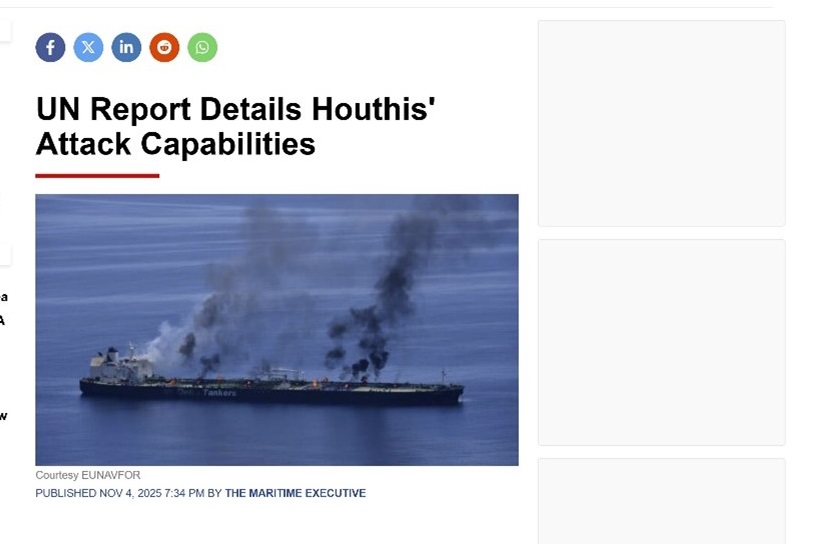
A report from the United Nations’ Maritime Executive confirmed the continued ability of Yemen’s armed forces to carry out offensive operations despite international sanctions and ongoing airstrikes on their positions.
The report noted that sanctions on Ansar Allah have failed to sufficiently curb their access to military equipment. Restrictions on imports have not prevented Sana’a from developing defensive and offensive weapons or maintaining enough capability to sustain operations. It added that airstrikes by major world powers and the Israeli occupation have not succeeded in weakening Yemen’s ability to conduct maritime and missile attacks.
The Key to the Red Sea Lies in the Entry of Food and the Safety of Gaza’s People
When Yemen maintained its battlefield equation in the Red Sea—declaring that its operations would not cease until aggression stopped and the siege on Gaza was lifted—the Zionist entity was ultimately forced to accept the reality on the ground.
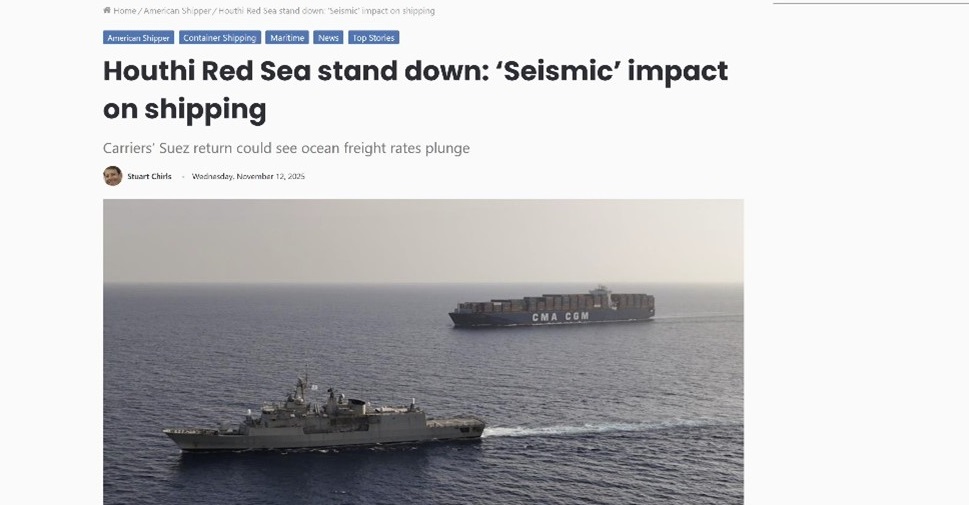
In this context, FreightWaves, a leading global shipping and transport outlet, reported that the Gaza ceasefire achieved what U.S. military operations against Yemen could not. Following the ceasefire, Yemen announced a temporary halt to attacks on Israeli-linked ships and cooperating companies in the Red Sea, raising hopes for the resumption of shipping through the Suez Canal for the first time since 2023.
The report stated that relative calm in Gaza reflected onto maritime corridors. Yemen’s decision came in support of de-escalation efforts, although global shipping companies remain hesitant to resume transit due to Gaza’s fragile conditions and persistent risks in the Red Sea.
It added that Yemen had clearly communicated its intentions in an official message to Hamas, confirming that Red Sea operations were paused temporarily as a “political response to the Gaza agreement.” Meanwhile, a summit of shipping companies in Egypt saw cautious optimism, with passage fees dropping by 60% due to temporarily reduced risks.
The report noted that French company CMA CGM remains among the few still operating some ships through the Red Sea despite the dangers. A full return to normal passage could ease global supply-chain pressures but may lower global freight rates.
The outlet concluded that the Gaza agreement marked an indirect turning point in international maritime security—achieving through political negotiation what American military operations failed to accomplish. It affirmed that Sana’a’s forces have become a central actor in the regional maritime-security equation, having compelled the world to deal with a new and undeniable reality in the Red Sea.