Ansarollah Website. Report
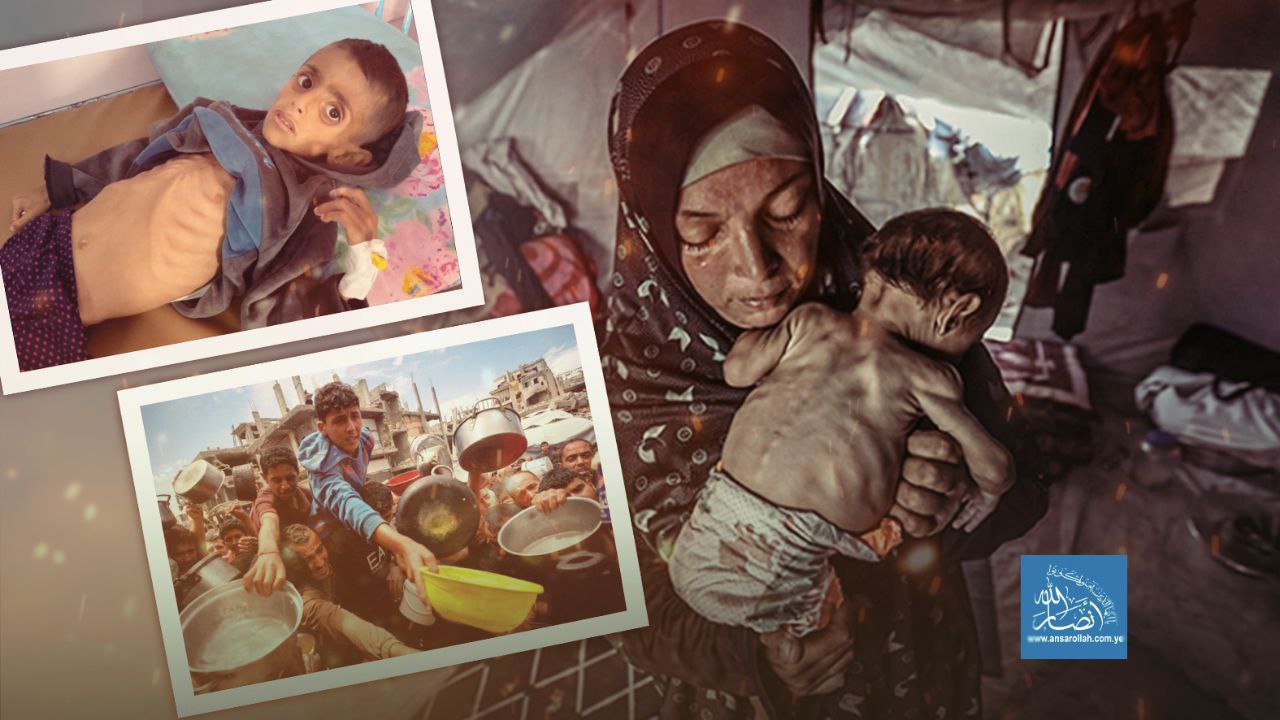
For the third consecutive year, the people of the Gaza Strip welcomed the holy month of Ramadan amidst the ongoing Israeli aggression. The repercussions of the war and the blockade have created an exceptionally harsh humanitarian and economic reality. While the streets of Gaza during Ramadan were historically bustling with decorations, vibrant markets, and the aroma of qatayef (a type of sweet pastry), today the scene is limited to displacement tents, rubble from homes, and the remains of victims.
With the loss of purchasing power and the disappearance of social traditions that have characterized Gazan society for decades, popular soup kitchens and independent relief initiatives have emerged as the primary humanitarian resource in the Gaza Strip. They serve as a last line of defense against the starvation policy practiced by the Israeli entity, which Human Rights Watch has described in its reports as a war crime, using starvation as a weapon against civilians. As the Israeli aggression intensifies for the third year, these modest kitchens have transformed from seasonal charitable acts into a sole lifeline for hundreds of thousands of displaced families who have lost their ability to cook due to the Israeli blockade preventing the entry of cooking gas.
"The Soup Kitchens of Resilience"
In the heart of the displacement camps in Deir al-Balah, volunteer Mahmoud al-Naouq oversees one of the soup kitchens that provides daily meals to thousands of displaced people. Al-Naouq explains that the work faces immense challenges due to the suffocating siege and the frequent closure of crossings. He emphasizes that they now rely entirely on whatever canned goods and legumes are available, noting that "the soup kitchen is an act of resistance to keep people alive in the face of an Israeli siege that aims to break their will by starving their children."
Data released by the Government Media Office in Gaza indicates that the Israeli enemy's deliberate targeting of aid convoys and obstruction of flour and fuel trucks has forced dozens of bakeries to close, further straining community kitchens that have resorted to rudimentary cooking methods. In this context, Umm al-Abd, a volunteer working in a field kitchen in the northern Gaza Strip, explains that food preparation takes place amidst the constant threat of bombardment. She is forced to cook large quantities of porridge or lentils over fires fueled by firewood burned from the rubble of destroyed homes. She emphasizes that "the meal provided to displaced people is their only means of breaking the fast under the siege imposed by the enemy for many months."
These initiatives are facing a double crisis this Ramadan: a severe shortage of potable and cooking water following the destruction of water infrastructure. Some soup kitchens are forced to transport water in dilapidated trucks that travel long distances under the threat of Israeli drones. Despite this, those running the initiatives insist on continuing, considering the success of providing an Iftar meal to a displaced family a humanitarian victory over the machinery of killing and starvation that seeks to render Gaza uninhabitable, amidst Zionist intransigence, international complicity, and Arab and Islamic silence.
From a human rights perspective, Rami Abdo, head of the Euro-Mediterranean Human Rights Network, explains that the Israeli enemy is pursuing a policy of "drip-feeding" aid to ensure that the population remains below the poverty line. This makes soup kitchen initiatives an indirect target of Israeli obstruction through the prevention of the entry of oils and frozen meat. Abdo adds in press statements that these popular initiatives have succeeded in filling a gap that international organizations, shackled by Israeli military restrictions, have been unable to fill. He emphasizes that the continued operation of these soup kitchens depends on popular funding and the personal risk of volunteers, some of whom have been directly targeted while performing their humanitarian duties.
Various Forms of Suffering
In light of this reality, the Palestinian Information Center confirms that commercial activities have shifted from large stores to simple tents, as is the case with Al-Qudra Supermarket in Khan Younis, which was one of the largest commercial centers before it was destroyed by Israeli missiles. The store owner, Zaher Al-Qudra, explains that his losses have exceeded two million dollars, noting that attempts to continue operating from inside a tent on Al-Rashid Coastal Street face existential challenges related to the scarcity of basic goods, sharp price fluctuations, and the lack of refrigeration and electricity, making securing Ramadan necessities a daily, perilous undertaking.
Regarding the daily lives of displaced people, the suffering of families who have lost their sources of income and stability is evident. Shayma Abu Hamam, displaced from Jabalia, explains that her family relies entirely on charitable meals from soup kitchens for their iftar meal, as they cannot afford even the simplest necessities like dates and milk due to the exorbitant price hikes caused by the aggression and the blockade. Retired employee Ayman Muhanna confirms this hardship, noting that salaries no longer cover even the minimum needs, making fasting a forced reality for many for months due to hunger and shortages.
The tragedy of Gazans doesn't end with poverty and hunger; it extends to the agonizing loss that accompanies their meager meals. Fouad Thabet, from Deir al-Balah, is observing his first Ramadan without his son Abdullah, who was killed on the last day of Ramadan last year. He describes the absence of his voice at the table as a wound that will never heal. Similarly, Munir Abu al-Ata expresses his compounded grief over the loss of his two sons, who were killed in an Israeli airstrike that targeted a mosque. He emphasizes that Ramadan, which used to bring the family together, has now become a season for reflecting on the heavy void left by their departure.
From an economic perspective, economist Maher al-Tabbaa confirms that the economic contraction and unemployment rates reaching nearly 80% have led to a complete collapse in purchasing power. Prices of goods have increased by more than 300% compared to before the aggression. Al-Tabbaa points out that the lack of cash has made Ramadan an additional financial burden on families, who are now limiting their spending to the bare necessities for survival.
In the shelters, displaced people Ghassan Fayyad and Muhammad Aliyan describe the radical change in the spirit of the holy month, as congregational prayers were absent after the Israeli enemy destroyed hundreds of mosques, and the decorative lights were replaced by the dim light of mobile phones, while cooking is done on firewood instead of the missing gas. Widad Hamouda recalls the rituals of preparation that used to begin before the sighting of the crescent moon, stressing that the destruction of homes and the dispersal of relatives among the displacement camps erased the features of the month that the people of Gaza were accustomed to, turning it from a season of tranquility and joy into a witness to the extent of Zionist criminality and the ugliness of the international community.