Ansarollah Website Official Report
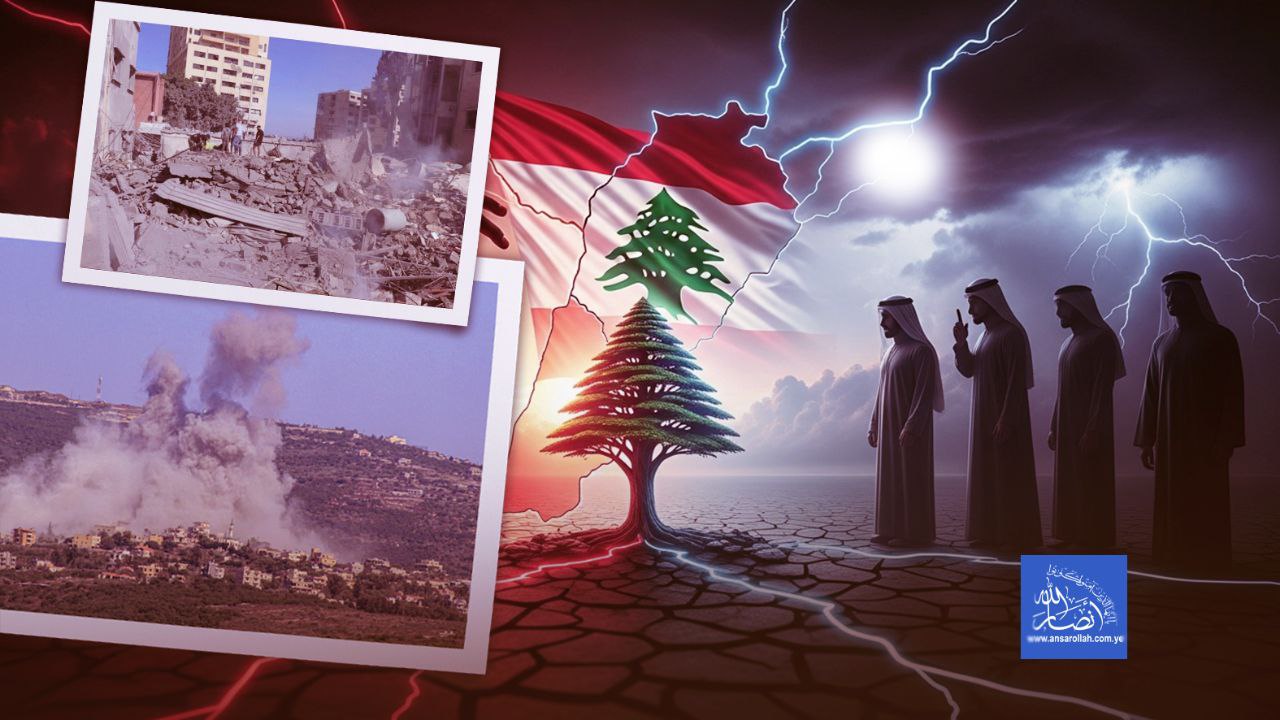
Israel’s latest escalation in Lebanon—culminating in the blood-soaked airstrikes on Baalbek and the Ain al-Hilweh refugee camp that left dozens dead and wounded—goes far beyond yet another violation in the long chain of ceasefire breaches.
What we are witnessing is the crystallization of an integrated and steadily intensifying Israeli strategy—one that is not confined to brutal military pressure, but extends into calculated diplomatic and political dimensions.
Its ultimate objective is clear: to reimpose the regional deterrence doctrine upon which the Israeli entity was founded and through which it has long secured its survival—while simultaneously entrenching a state of open-ended aggression that targets not only Lebanon and its resistance, but seeks to bend the entire region to its will. This is no series of impulsive battlefield reactions; it is the meticulous execution of a blueprint that exploits every political or diplomatic setback to advance far-reaching strategic goals.
The recent wave of air raids—indiscriminate in their toll, sparing neither child, woman, nor elderly civilian, as the blood of martyrs in the Bekaa and the South bears witness—directly and systematically targeted residential buildings, exposing once again the falsity of Israel’s claims that it strikes only military sites.
The deliberate targeting of civilians, preceded by the bombardment of Ain al-Hilweh camp under flimsy pretexts, represents a practical application of the enemy’s long-standing “consciousness deterrence” doctrine: punishing the social base of the resistance, attempting to fracture it from its choice of steadfastness through terror and devastation, and obstructing any prospect of reconstruction in a bid to impose collective punishment and perpetuate despair.
Yet, for all its savagery, this policy has historically failed to break the will of the people. On the contrary, it has only deepened their attachment to their land and convictions. The people of the South have endured and tested this approach for decades—and so too has the Israeli enemy, at various stages of the conflict.
More dangerous than the now predictable Israeli criminality is the international silence that has verged on complicity, coupled with unprecedented American backing that provides political and diplomatic cover for every crime.
The sponsors of the ceasefire agreement are no longer mere passive observers to Israeli violations; through their silence and bias in the face of thousands of breaches, they have become de facto partners. In this context, former Lebanese President General Émile Lahoud expressed no surprise at Israeli aggression or international collusion, but voiced astonishment at certain domestic reactions that justify the executioner while attacking the victim—an unmistakable reference to Lebanese voices that turn a blind eye to the killing of their own citizens and echo the enemy’s narrative.
Such internal division inflicts damage comparable in gravity to that caused by the enemy itself. Any Lebanese faction that feels emboldened against another by virtue of external backing does not strengthen Lebanon—it hastens its unraveling.
This raises an urgent question: what, exactly, would Lebanon lose by adopting a firm and immediate stance instead of resorting to silence or impotent diplomacy? Such a position would likely command broad cross-sectarian support, as reflected in calls by the Muslim Scholars Gathering and others urging the state to suspend measures taken under previous commitments and refrain from new steps until the enemy fulfills its obligations—chief among them full withdrawal from occupied territory and a complete cessation of aggression.
These appeals place the state before its historic responsibilities, calling for a shift from reactive posture to proactive leadership—by convening the UN Security Council and confronting the world with its duties, not as a supplicant for justice, but as a sovereign nation that possesses leverage—foremost among it, its resistance.
The targeting of Ain al-Hilweh camp—under the pretext of a Hamas training site—simultaneously with the bombardment of the Bekaa underscores the inseparable bond between the Lebanese and Palestinian causes, and exposes the illusion of any attempt to detach one from the other.
The enemy is one; the battle is one; the destiny is shared. Geography or faith cannot sever these ties. In this vein, the Islamic Group’s condemnation of the aggression reaffirms that the expansion of Israeli strikes to civilians in their homes constitutes a systematic crime that lays bare the entity’s terrorist nature.
Israel’s current offensive strategy does not merely aim to weaken the resistance in the present moment; it seeks to shape the region’s future in accordance with its broader security ambitions. Lebanon, amid this sweeping Israeli overreach, is but one arena within a project that extends beyond the immediate ring of states surrounding Palestine and will not be contained by the borders of the Golan Heights, Sinai, Shebaa Farms, or even the Negev.
It reaches further—toward the region in its entirety. Israeli officials have never hesitated to voice such ambitions, reiterating them openly, as seen most recently in remarks by the United States ambassador to Israel during his interview with prominent American journalist Tucker Carlson.
By the logic of reason and the fundamentals of this conflict, the response cannot be fragmented or hesitant. What is required today is a unified national stance that recognizes the strategic resolution of this crisis does not lie in yielding to Israeli pressure—which relentlessly seeks to normalize a doctrine of unrestrained aggression—but in constructing a comprehensive defense strategy that harnesses the collective strength of Arab states threatened by the Zionist project.
Lebanon once demonstrated the efficacy of such a formula through what became known as the “golden equation”—the triad of Army, People, and Resistance. The confrontation unfolding today is a battle of wills.
The resistance, in upholding its right to deterrence and defense, does not defend a faction or sect; it defends Lebanon’s existence, sovereignty, and dignity. In doing so, it stands as the first line of defense for the entire Arab world—from sea to ocean—against attempts to impose total subjugation.