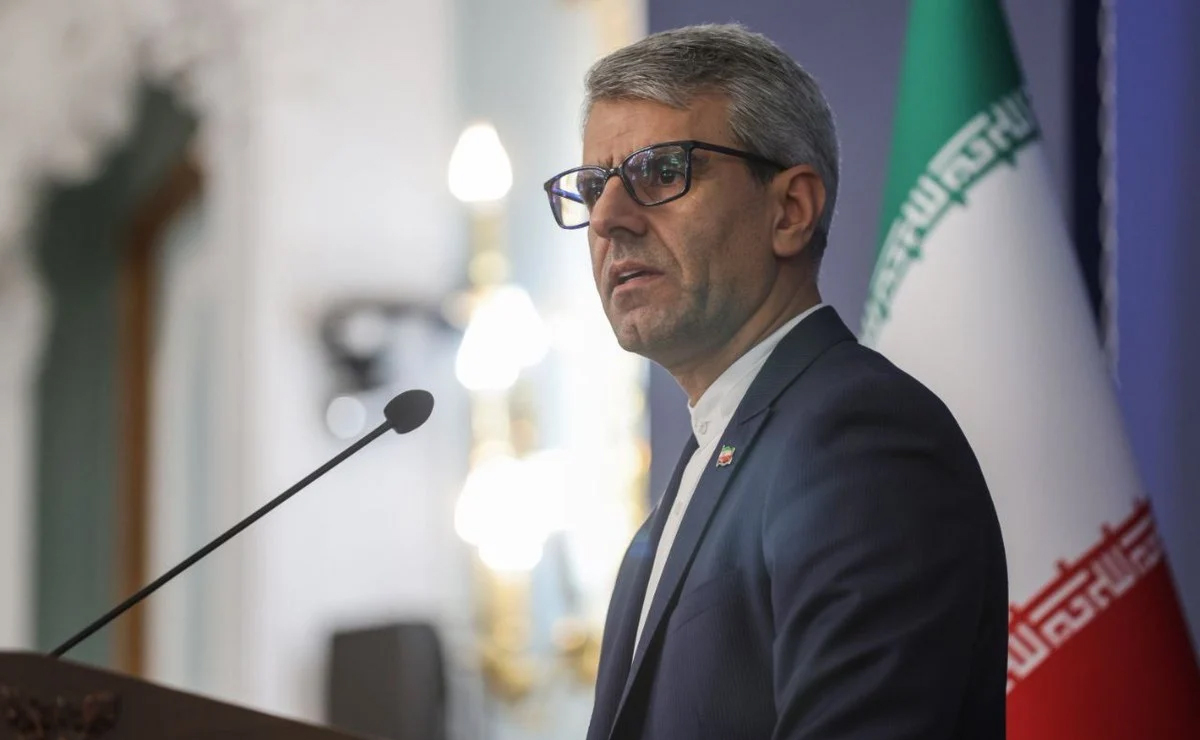
Iran’s Foreign Ministry spokesperson Esmail Baghaei responded firmly to remarks by European Union foreign policy chief Kaja Kallas regarding freedom of navigation in the Strait of Hormuz, describing Brussels’ invocation of “international law” as the “height of hypocrisy.”
In a post on the social media platform X, Baghaei questioned the EU’s position, asking: “Which international law is the European Union referring to? The one it invokes to lecture others while silently endorsing US-Israeli aggression and overlooking atrocities committed against Iranians?”
He added, addressing European officials directly: “Spare us your lectures. Europe’s chronic failure to practice what it preaches has turned its talk of international law into hypocrisy.”
On the legal and operational front, Baghaei stressed that no rule in international law prevents Iran, as a coastal state, from taking necessary measures to prevent the use of the Strait of Hormuz to launch military aggression against it.
The Iranian Foreign Ministry spokesperson asserted that what is called the “right of unconditional transit passage” in Hormuz has ended, considering that this “myth collapsed the moment US-Israeli aggression brought American military assets into the backyard of the strait,” indicating that threatening foreign military presence nullifies any previous navigation privileges.
These statements come to reinforce Iran’s recent position of imposing a “new maritime regime” in the Strait of Hormuz, in response to ongoing US and Israeli threats to the region’s security.
Meanwhile, Iran’s Parliament Speaker Mohammad Bagher Ghalibaf said on Saturday that the Strait of Hormuzthat the Strait of Hormuz is under the control of the Islamic Republic, and that it dealt “firmly” with US attempts to remove mines, considering that this step represents a “violation of the ceasefire.”
Earlier, Trump claimed that Iran had agreed to fully open what he referred to as the “Iran Strait” (Hormuz), making it ready for complete passage. However, he noted that a maritime blockade on Iranian ports would remain in place “until our dealings with them are completed 100%,” expressing expectations that “this process will move very quickly.”