
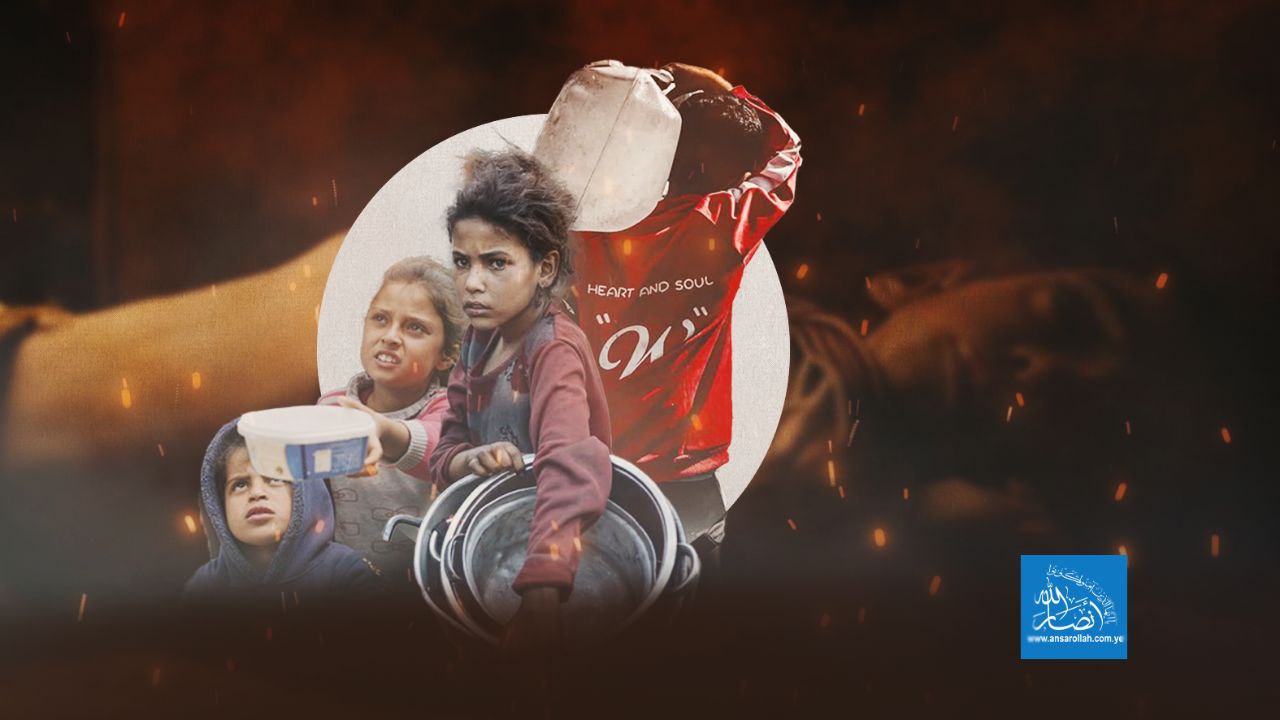
In queues stretching for hours before sunrise, thousands of Palestinians in the Gaza Strip wait in the hope of securing a single bundle of bread—a stark reflection of the daily hardship endured by families worn down by displacement and blockade.
As the Zionist enemy continues to obstruct the implementation of the agreement signed in October 2025, the bread crisis has forcefully returned to the forefront, driven by acute shortages of flour and fuel, alongside a sharp decline in international aid.
Amid this worsening situation on the ground, Mohammed Jadallah, displaced from the city of Rafah to the Mawasi area in the southern Gaza Strip, begins his daily wait at five in the morning.
Describing his ordeal, he says: “One bundle of bread may sometimes be enough, but in many cases it does not meet a family’s needs.”
He adds that he then turns to charitable soup kitchens in search of an alternative meal, while at times his children go to bed hungry. With deep bitterness, he asks: “We adults can endure hunger—but how do you convince a child crying from hunger that there is no bread?”
The crisis extends far beyond individual cases, worsening among large families. Salem al-Hawari, who supports a household of eleven, faces a compounded dilemma.
After hours of waiting, he receives a single bundle containing twenty loaves—effectively one loaf per person per day—a quantity that is insufficient in the absence of other food alternatives.
Geography of Deprivation: Crossings and Shocking Figures
This deteriorating humanitarian reality is the product of a systematic policy of Zionist control over the flow of supplies. Since the onset of the offensive on October 7, 2023, the Gaza Strip has endured three severe waves of famine.
Field data indicate that the crisis reached its peak after the Zionist enemy exploited the war in Iran to tighten the blockade on Gaza, with Israeli authorities reimposing strict restrictions on supply chains—leading to a drop in bread production exceeding 45 percent, according to estimates by the Bakery Owners Association.
Despite the terms of the ceasefire agreement that came into effect in October 2025—which stipulated the entry of 600 aid trucks per day under the humanitarian protocol—Ismail Al-Thawabta, Director General of the Government Media Office in Gaza, affirms that the Israeli authorities are pursuing a systematic policy of starving the Strip by tightly controlling the flow of essential goods. He warned that Gaza is facing a dangerous deterioration in food security.
To underscore the scale of this decline, Al-Thawabta outlined—through stark figures—the magnitude of the humanitarian catastrophe gripping the enclave.
The daily need for flour stands at approximately 450 tons, while Israeli authorities permit the entry of no more than 200 tons. This numerical deficit translates on the ground into a near paralysis of the supply system, with incoming quantities amounting to no more than 38 percent of pre-war levels, despite the provisions of the humanitarian protocol under the October 2025 ceasefire agreement.
He warned that the continued reduction in aid flows and the failure to adhere to agreed truck entries could lead to the collapse of what remains of the bread supply system in the Strip.
Further reinforcing these stark realities, data from the office indicate that only around 30 bakeries are currently operating across Gaza—a sharp decline from pre-war levels—with a daily production capacity of approximately 133,000 bundles of bread. Of these, 48,000 are distributed free of charge, while 85,000 are sold at subsidized prices through 142 distribution points.
Declining Aid and Intensifying Restrictions
In parallel with these tightening controls, the World Food Programme reports that approximately 1.6 million people in the Gaza Strip—around 77 percent of the population—are facing acute levels of food insecurity.
This includes more than 100,000 children and 37,000 pregnant and breastfeeding women, a deeply alarming indicator of an impending health and nutrition crisis.
Against this backdrop, the drivers of the crisis are becoming increasingly intertwined. Alongside the blockade imposed by the Israeli enemy on border crossings, several international relief organizations have suspended critical support.
World Central Kitchen has halted its flour assistance, having previously supplied between 20 and 30 tons per day, while the World Food Programme has reduced its daily flour distributions from 300 to 200 tons.
Yet the war on bread extends beyond shortages of raw materials. Behind the human queues lies a technical crisis no less severe than the lack of food itself.
Field monitoring has documented the deterioration of bakery machinery operating on aging, overburdened generators, as the Israeli enemy continues to block the entry of maintenance equipment, spare parts, and industrial lubricants for months.
According to Abdel Nasser al-Ajrami, head of the Bakery Owners Association in the Gaza Strip, the sector is facing a sharp production deficit of up to 45 percent.
He explains that the continued ban on importing industrial oils for generators, along with essential spare parts, is deepening the crisis, noting that bakeries that have gone without maintenance for two years are now beginning to collapse.
He warns that the next phase may be a “machinery crisis,” not merely a flour shortage—since the availability of flour becomes meaningless without the means to bake it.
The Black Market: A Parallel Hunger Economy
This deliberate paralysis of the production system has gone beyond mere supply shortages, generating deep economic distortions. The widening price gap between subsidized and commercial bread now reflects the full severity of the living crisis.
A subsidized bundle of bread is sold for 3 shekels, while in the parallel market its price rises sharply to between 7 and 15 shekels—a dramatic surge that coincides with the increase in the price of a sack of flour from 25 to 100 shekels.
This escalation comes despite the fact that the vast majority of Gaza’s population is unable to access markets at all, due to halted livelihoods, suspended commercial activity, the Israeli blockade, and the systematic destruction of civilian life in the Strip.
Samir Baroud, who remains stationed at distribution points, describes the situation as an ordeal beyond human endurance, stressing that “arriving even minutes late at dawn means fathers return empty-handed, forced to face their children with nothing.”
The structural crisis deepens further as daily allocations continue to shrink. Mahmoud al-Kilani, who runs a licensed distribution point, says his quota has fallen from 1,000 bundles per day to just 750, forcing distributors to strictly ration supplies to one bundle per family, regardless of household size.
The hardship is no longer limited to bread availability; it has expanded into a liquidity crisis and a severe shortage of small change. Wael Darwish notes that “securing the price of a single bundle has itself become a grueling process,” as displaced families are increasingly forced to borrow money just to afford subsidized bread that has become increasingly inaccessible.
Figures Pointing to Total Collapse
From a strategic standpoint, the bakery sector is experiencing severe depletion. According to Abdel Nasser al-Ajrami, head of the Bakery Owners Association, the war has destroyed more than 30 bakeries, while another 30 facilities are operating at half capacity, and 15 more are awaiting essential operating supplies that remain unavailable.
The pressure has not been limited to direct destruction; it has also included a staggering surge in operating costs. The price of a litre of generator-grade mineral oil has risen from 15 shekels to 2,000 shekels on the black market, while the cost of transporting commercial flour has reached 20,000 shekels per truck.
These conditions have made continued production what he described as “economic suicide,” reflecting one of the most severe manifestations of the blockade imposed on the Strip.
Collapse of Home Baking and Severe Health Consequences
Following the erosion of large-scale production capacity, home baking is no longer a viable option for many families. Nidal Abdel Aal explains that long queues have returned due to rising prices, coupled with a shortage of cooking fuel.
“This has prevented our families from baking at home, and we have become entirely dependent on subsidized bakeries,” he says. In the absence of electricity, cooking gas, and even firewood, households are forced to reduce daily meals or rely on lower-nutrition substitutes, raising concerns over increasing rates of malnutrition among children and the elderly.
Alongside the looming threat of hunger, a worsening public health crisis is emerging. With the destruction of Gaza’s infrastructure and the spread of rodents and insects in displacement camps lacking even the most basic sanitation conditions, health risks are escalating. This comes amid warnings of potential outbreaks of disease and epidemics in an already severely strained environment.
Hunger Worse Than War
The so-called “third famine” ravaging the Gaza Strip goes beyond a transient shortage of resources, evolving into a systematic strategy employed as part of a broader campaign of starvation targeting the very fabric of daily life.
This is a field reality articulated by Ibrahim Qandil, a displaced resident from the Zeitoun neighborhood, in a stark testimony that reflects what he describes as the collapse of an international system complicit through silence and inaction.
Behind scenes of long distances and hours of waiting for a single bundle of bread—insufficient for a family of nine—lies the scale of the suffering endured by the population.
Qandil summarizes this reality in unequivocal terms: “Hunger is more severe than shelling and war, and what we are living through today is a catastrophe in every sense of the word.”
The article concludes with highly charged and inflammatory language, framing the situation in extreme political and ideological terms and accusing various parties in sweeping and generalized ways.
It also contains calls that reflect an escalation toward violent confrontation. These statements reflect the tone of the original text but are not presented as factual assertions here.


