Ansarollah Website | Report by: Wadee Al-Abasi
Saudi Arabia continues to kill the Yemeni people in general, including its own loyalists, devising multiple methods to do so. Whoever survives the deliberate bombardment of its aircraft—or what it terms a "technical error"—is pushed into suicidal field adventures. In light of this, the plan to drag Taiz Governorate and its sons today into the furnace of confrontations becomes clear as part of a strategy based on burning Yemeni energies—whether in Taiz or the remaining governorates—to create conditions conducive to imposing foreign dominance and influence over the country, stripping it from the hands of its people.
The current tension in certain areas of Taiz is merely the outcome of the Saudi mobilization effort, through which the enemy seeks to ignite the governorate by force in an attempt to escape the obligations of the "siege for siege" equation. Because this attempt is traditional, Yemenis have recognized its goal and purpose, which contradict the interests that those deceived believe the Saudis came to provide for them.
A System of Illusory Promises
The course of the aggression was never governed by the compass of Yemen’s national interest or fulfilling the aspirations of its people for security and development. Instead, killing, destruction, and crisis-manufacturing were utilized as tools to drain vital forces and direct battles according to a broader scheme in which the Israeli enemy remains hidden in the details while Saudi Arabia takes the lead, deploying all resources to execute it.
Because failure has consistently accompanied all Saudi moves, its mobilization in Taiz today comes in the context of trying to vent its military and political failure by pushing the sons of the governorate to be fuel for projects in which they possess no decision-making power and do not participate in defining their strategic objectives.
The ongoing mobilization in Taiz and the attempts to market the illusion that they are on the verge of "decisive battles" that will bring stability and prosperity to the people of the governorate rely on a system of illusory promises—promises that have been repeatedly made across various occupied regions and proven, over twelve years, to lack credibility in reality.
The Model Brought by Saudi Arabia
Looking at the reality of areas under the control and decision-making of the Saudi-American coalition, it becomes clear that they have not experienced the alleged stability. Instead, they have remained an open arena for perpetual crises, internal conflicts, and management-by-crisis. Basic services are non-existent, the purchasing power of the national currency has collapsed to unprecedented levels, and social security is absent—not to mention the issue of salaries, which has been turned into a political and economic blackmail tool whose collection and disbursement are tied to Riyadh’s approvals and conditional deposits that guarantee continued dependency and subjugation.
This is the model that Saudi Arabia has brought to those areas. Here, continuing to indulge in the myth of prosperity that Riyadh could achieve for Yemen—or for Taiz Governorate, where it is actively pushing its people to immerse themselves in the scheme—is a matter that may bring severe shocks, plunging the governorate into total chaos.
In an expanded gathering of religious scholars, preachers, guides, and educational and social figures under the title "Rejection of Saudi Enemy Mobilizations and Crimes Against the Yemeni People, and Support for the Equation of Siege for Siege and Escalation for Escalation," the Mufti of Taiz Governorate, the religious Scholar Alawi bin Aqil, emphasized that betting on the forces of dominance and arrogance will yield nothing but subordination and loss. Bin Aqil stressed that the history of the people of Taiz and Yemen as a whole is rooted in carrying the Mohammedan message and spreading values of brotherhood and intellectual and religious integration, stating: "Attempts to erase the governorate’s cultural identity by drowning it in projects of intellectual subservience or blind political dependency will shatter entirely against the awareness and historical authenticity of its people, derived from the legacy of its scholars and landmark mosques such as Al-Muzaffar, Al-Ashrafiya, and Al-Janad Mosque."
Saudi Military Opportunism
The Saudi mobilization move is not built on solid ground that ensures an automatic response leading to subjugating the sons of this proud governorate according to its scheme. Rather, it relies on a despicable opportunism that exploits the dire living conditions and economic hardship imposed on all of Yemen to deceive youth, tribesmen, and families in Taiz, pushing them into a new holocaust in exchange for crumbs of political money or promises of salaries in Saudi Riyals—salaries that are illusory or unguaranteed, and if paid, quickly stop once Riyadh's immediate military objective ends.
Observers emphasize that this behavior represents the highest degree of political and military opportunism, where the citizen is asked to fight a brutal and futile battle, paying its price with their blood, present, and the future of their children, while the directing and funding party—Saudi Arabia—remains far from direct losses, waiting to invest in and leverage the political outcomes.
A review of recent history clearly demonstrates the huge price paid by the people of Taiz due to trusting Saudi promises. Throughout eight years of direct aggression prior to the de-escalation truce, Saudi Arabia committed the most heinous massacres against civilians in this governorate without any deterrent.
The national memory will not forget those painful scenes that struck popular markets, residential clusters, and peaceful homes across various districts of Taiz, claiming the lives of entire families—women, children, and the elderly—under the pretext of military targeting or through what was termed "technical errors," which are in reality war crimes documented by independent international and local reports.
From Al-Mokha and Shara'a to Al-Ma'afir and Mafraq Mawiyah
Among the most prominent tragedies witnessed by Taiz was Al-Mokha massacre in July 2015, in which Saudi-American aviation targeted—allegedly due to a "technical error"—residential compounds for power plant workers and employees. The strike resulted in the martyrdom of more than 120 civilians, injured dozens, and destroyed their homes over their heads. Human Rights Watch described this crime in its field reports as a war crime amounting to a grave violation of international humanitarian law due to the absence of any military target in the immediate residential area. This massacre was only the beginning of a long series of targeting civilian objects and public gatherings.
Similarly, the national memory records with great sorrow Shara'a market massacre in Al-Ta'iziyah District in December 2017, when coalition aircraft launched intensive airstrikes on a crowded market packed with citizens, traders, and street vendors. The attack resulted in more than 50 martyrs and dozens of wounded, turning the site into rubble and blood in scenes that shocked human conscience and confirmed complete disregard for Yemeni lives.
In the same context, Al-Hamli market massacre in Mauza District in July 2017 stood as a witness to the direct targeting of people's livelihoods, where dozens of civilians were killed and injured while shopping and seeking their daily sustenance, without any regard for the sanctity of life or the internationally mandated rules of distinction and proportionality.
The districts of Al-Silw, Maqbanah, and Dimnat Khadir witnessed repeated airstrikes targeting citizens' homes and vehicles carrying passengers and goods. In Maqbanah District, airstrikes targeted residential gatherings and farms tied to citizens' daily lives, leading to the eradication of entire families, similar to massacres targeting displaced persons who fled the heat of battle only to meet their death by airstrikes in areas supposed to be safe. The same scene was repeated in Al-Silw, where peaceful residential homes were targeted, killing and injuring dozens of children and women, as documented by the Office of the United Nations High Commissioner for Human Rights in periodic reports issued by the Group of Eminent International and Regional Experts on Yemen.
Waving Illusions and Conditional Aid
This series of crimes did not stop at that sad past but has continued to this day. The blood of civilian victims has not yet dried from the massacre at the central commercial market in Taiz at Mafraq Mawiyah, which resulted in the martyrdom and injury of 47 civilians (7 martyrs and 40 injured), along with widespread damage to properties and commercial shops.
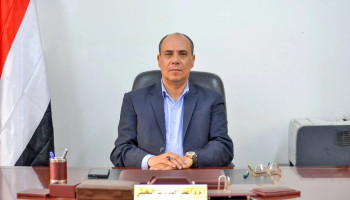
The Acting Governor, Ahmed Al-Musawa, emphasized: "These crimes will not achieve any political or military objectives for the aggression; rather, they increase the determination of the people of Taiz to confront the aggression and defend their city through all means."
These massacres and crimes documented by international field reports were not mere passing incidents, but rather an explicit expression of how Saudi Arabia views the Yemeni human being. It has squandered Yemeni blood and destroyed the nation's infrastructure and life assets, only to come today waving illusions and conditional financial aid, demanding that Yemenis engage once again in rounds of internal fighting aimed at prolonging war and suffering, and feeding social division among the sons of a unified Yemen.
Judging by these crimes, one can realize what the Saudi enemy could bring—an enemy unconcerned if all Yemenis were killed, provided it achieves its aggression's objective of establishing full control over Yemen, dominating it, and plundering its resources.
The Practical Experience of Occupied Governorates
The experience of Aden, Hadramout, Abyan, Al-Dhalea, and other regions under Saudi control reveals the true picture of the Saudi project in Yemen. It is a glaring model of systematic security chaos, the proliferation of armed factions, the absence of effective state institutions, and drowning the citizen in a daily struggle for water, electricity, and salaries—which have become a tool for subjugation and blackmail. Those governorates did not experience the promised stability or economic prosperity; instead, they live under the weight of continuous inflation, collapsing purchasing power, the suspension of strategic development projects, and the monopolization of sovereign decision-making and vital facilities such as ports, airports, and oil regions. This proves that the primary objective was never to develop these areas or support their people, but rather to shackle and exploit them to serve regional agendas.
This alone serves as a clear model confirming that what Saudi Arabia offers is nothing but bait to trap Yemenis in a deception, ultimately directing them toward the paths it desires. This is precisely what is happening today in Taiz, which continues to live in a distressed reality across all aspects of life, with rising poverty levels and intolerable price increases for basic commodities.
Required Awareness and the Path to National Salvation
Accordingly, following the new calls for mobilization in Taiz will produce nothing except deepening discord and division among the sons of the same nation, exacerbating the wounds of a governorate that has suffered immensely, and draining its finest youth in battles that serve no national cause and achieve no developmental or stability goals.
The awareness required today from all social, academic, tribal, and intellectual forces in Taiz must rise to the level of the challenge by refusing to become fuel for futile battles and by adhering to the independent national choice that rejects foreign dominance and guardianship. This choice must put an end to the opportunistic exploitation of Yemeni blood and living hardships.
Furthermore, addressing the situation in Taiz and all Yemeni governorates cannot come through importing solutions from abroad or executing Saudi dictations, which twelve years of experience have proven to bring nothing but tools of destruction and fragmentation.