
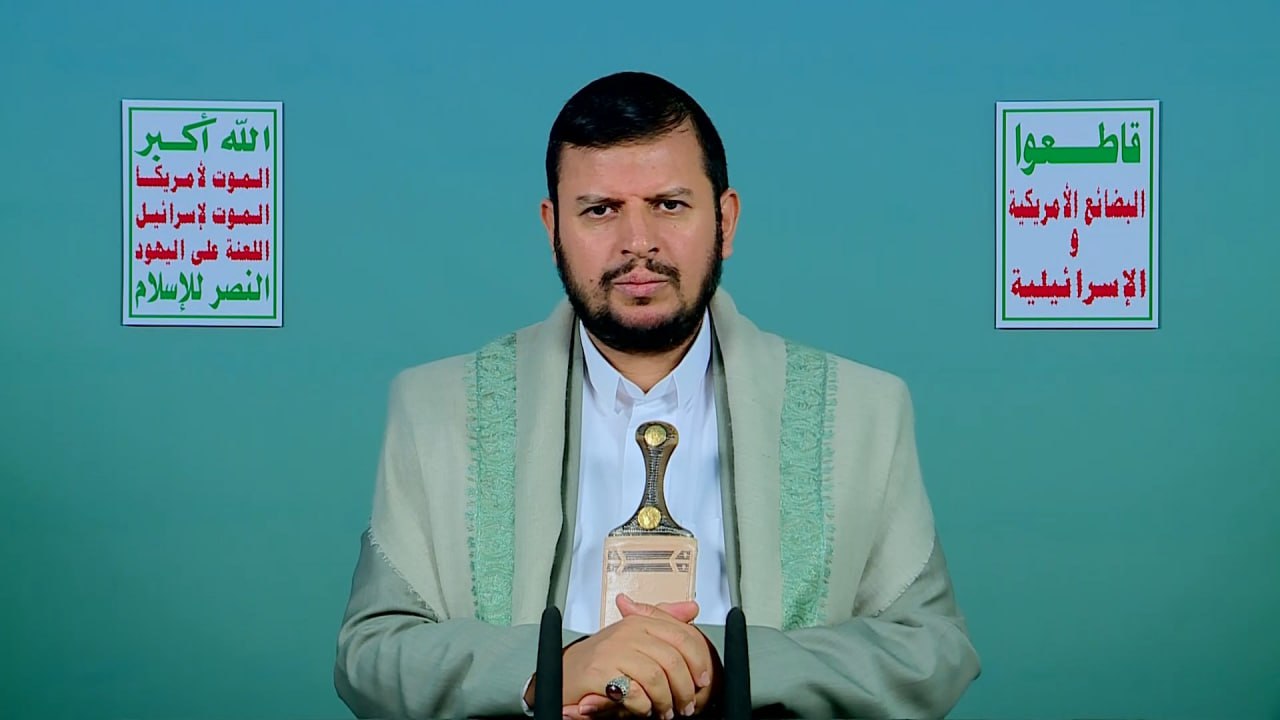
Ramadan Lecture Series 1447 A.H.
Presented by Al-Sayyid Abdul Malik Badruddin Al-Houthi
Lecture Eighteen
Saturday, 18 Ramadan 1447 A.H. (7 March 2026 A.D.)
COURTESY TRANSLATION
IN CASE OF DISCREPANCY, THE ORIGINAL TEXT PREVAILS.
I seek refuge in Allah from Satan, the outcast.
In the name of Allah, the Compassionate, the Merciful.
Praise is to Allah, Lord of the Worlds. I believe that there is no god but Allah, the Sovereign and the Manifest Truth, and that our master Muhammad is His servant, Messenger, and Last Prophet.
O Allah! Confer Your salat and blessings upon Muhammad and the Family of Muhammad as You conferred Your salat and blessings upon Ibrahim and the Family of Ibrahim. You are Owner of Praise, Owner of Glory! And be pleased with Muhammad's good companions and all Your righteous servants and mujahidin.
O Allah! Guide us and grant us acceptance, for You are the Hearing, the Knowing; accept our repentance, for You are the Relenting, the Merciful.
Brothers and sisters, peace be upon you and the mercy of Allah and His blessings.
In the story of Prophet Musa (PBUH), as presented in the blessed verses of Surah Al-Qasas, we have come to the verses describing his arrival in Midian and the events that followed. When he came to the water of Midian and saw the people watering their livestock, he noticed a striking scene: two women were holding back their sheep so that they would not push forward among the other flocks of the shepherds. When he asked them, {'What is the matter? They replied, “We cannot water until the shepherds are done, for our father is a very old man"'}. Prophet Musa (PBUH) immediately took an interest in their situation and watered their flock for them. This reveals the spirit of kindness and benevolence he carried—even at a time when a person might naturally be overwhelmed by his own problems and fail to notice the needs of others. At that moment, Musa (PBUH) was a stranger without shelter, exhausted from the hardships of travel, hungry, and penniless. He was experiencing the pressures that normally weigh heavily on a person, affecting his mental state, attention, and thinking.
After the two young women returned home to their father earlier than usual and undoubtedly told him what had happened, we saw how that righteous old man demonstrated noble morals and repaid kindness with kindness. We also saw how Allah answered Musa's supplication, after he moved to the shade in that condition and prayed, {'My Lord! I am truly in need of whatever provision You may have in store for me'}. Allah answered his supplication and arranged full care for him.
{'Then one of the two women came to him, walking bashfully'}. She was one of the daughters of the righteous old man. We spoke about the immense importance of this noble virtue: modesty. The verse describes her as {'walking bashfully'}, revealing her profound sense of modesty. This noble quality varies among people. Some possess a profound sense of modesty that becomes deeply rooted in their character and clearly appears in their behaviour, actions, speech, and dealings with others. Others possess it to a lesser degree, while some possess very little of it.
We even discussed the important attribute of modesty in women and how possessing this noble quality is one of their most significant traits. In fact, this virtue is essential for both men and women. As we explained in the previous lecture, modesty is especially important in a person's relationship with Allah (Glory be to Him). Through modesty a person reveres Allah, honours Him, and recognises the greatness of His blessings upon him. As a result, he feels ashamed before Allah to commit any wrongdoing. Such modesty has a significant impact on a person's relationship with Allah, for it encourages uprightness, piety, and vigilance against sins, vices, transgressions, and shameful acts. Indeed, a person who possesses modesty also avoids actions that may bring shame upon him and that damage his dignity, values, and commitments as a believer.
Modesty is a great and noble virtue. It includes many of the finest qualities of character, along with principles and values that cultivate in a person a deep sense of modesty within his conscience. This is because modesty is, first and foremost, an inner feeling, a sensation in the depths of the soul, that appears outwardly in a person's expression, appearance, behaviour, attentiveness, commitment, speech, and so on.
In addition, modesty is part of faith. We have read in the hadith: 'Modesty is part of faith, and there is no faith for one who lacks modesty.' In another previously-mentioned hadith, the Prophet (PBUH&F) said, 'Verily, Allah loves the modest, the forbearing, and the chaste who refrain from asking people, and He detests the foul-mouthed, the obscene, and the one who is overdemanding.' And we have also read the hadith: 'For everything there is a moral quality, and the moral quality of a human being is modesty.'
This virtue is especially evident in the prophets and messengers of Allah. They possess modesty at the highest level. The Holy Quran describes the Messenger of Allah, Muhammad (PBUH&F), as possessing immense modesty. His modesty was so great that he felt more shy before the Muslims than they felt before him. Because of that, Allah sometimes addressed matters directly in order to discipline the Muslims at that time in their dealings with the Messenger of Allah, since the Prophet himself felt too shy to speak to them about certain issues related to how they should behave with him: Allah (Glory be to Him) says, {'Such behaviour is truly annoying to the Prophet, yet he is too shy to ask you to leave. But Allah is never shy of the truth'}.
Modesty is a refined and noble virtue. It is one of the noble morals, and the more a person grows in modesty, the more elevated his moral character becomes. He may refrain even from actions that are not sins or immoralities, yet nevertheless diminish his nobility, reputation, and moral standing or affect his honour and noble character. At its core, modesty involves refraining from wrongdoing and lacking any boldness towards sin, corruption, or immoral conduct. Yet it also extends further, encouraging a person to avoid behaviours that diminish his values or lower the standard of his noble character. Some actions are therefore avoided simply because they are shameful, even if they do not reach the level of sin, vices, or corruption. A person may also be reproached for actions that reflect a flaw in his moral character or conduct, even if these do not amount to sins or transgressions.
Modesty is a noble and significant virtue, essential for both men and women. For women in particular, it stands out as one of their most important traits, influencing their behaviour, interactions, decency, and even their way of walking–{'walking bashfully'}. This great and important virtue encompasses a collection of other noble morals.
Likewise, the righteous old man (the father of the two women) demonstrated noble morals. Indeed, his eagerness to reward a good deed reflects noble morals. To appreciate kindness and reward it reflects noble morals, as it is a mark of nobility and generous character. It reflects nobility and immense values: {'When Musa came to him and told him his whole story, the old man said, “Have no fear! You are safe from the wrongdoing people”'}.
Then, while Prophet Musa (PBUH) was a guest in the home of that righteous old man—who intended to reward him for his kindness—one of the man's daughters made a significant proposal to her father. She took the initiative with this suggestion: {'One of the two daughters suggested, “O my father! Hire him. A strong, trustworthy person is definitely the best to hire”'}. The daughter suggested that her father hire Musa (PBUH) to work for him, relying on an accurate assessment and sound criteria. Thanks to her insight and astuteness, she recognised great and important qualities in Musa (PBUH). She observed this in his initiative to water the flocks for them, in his concern for their situation, and in the respectful manner in which he dealt with them both during and after the watering. She also noticed these qualities in his conduct when she went to convey her father's invitation, and as he walked with her to meet him. It is mentioned in narrations that he asked her to let him walk ahead of her, while she would guide him along the path from behind—directing him left, right, and so on—until they reached their home. From the very beginning, despite her own modesty, chastity, and self-respect, she noticed these incredibly important qualifications and values through her astuteness and through Allah's guidance—after all, the will of Allah (Glory be to Him) is behind all of that, since He facilitates good through the hands of good people.
Even during his time in their home, she recognised these qualities in Musa (PBUH). In general, a person's true nature becomes evident through his conduct, his speech, dealings, and actions. If he is a good person, marked by noble character and sound values, those values naturally become manifest in what he does and how he behaves.
Thus, she recognised the significant qualities he possessed, and she presented this significant suggestion to her father: {'One of the two daughters suggested, "O my father! Hire him. A strong, trustworthy person is definitely the best to hire"'}. In other words, the best person to hire is one who possesses these two qualities: strength and trustworthiness. These two qualities—strength and trustworthiness—are indeed among the most important qualities required for duties and responsibilities.
Thus, as a general concept in relation to any task, strength refers to possessing the ability to perform it, with the necessary capabilities on all levels: psychological, intellectual, and physical—which together enable a person to fulfil the responsibilities required of them.
Likewise, with regard to trustworthiness, it is among the most important qualities. In its full sense, it relates to safeguarding things and taking proper care of them. That is, its complete meaning includes both care and preservation. In addition, it is among the most important characteristics. Therefore, it holds great importance, as it is among the noble, great, and essential values that a person should embody and adhere to in his life. It is important for a person as a human being, and it is required in every field of work and in all responsibilities in this life. Trustworthiness is of great importance for prosperity, the proper functioning of human affairs, and success both individually and collectively: for a nation, a state, a people, a tribe, an organisation, an institution, or an association. In fact, wherever there is trustworthiness, there must be success; if trustworthiness is lost, failure ensues. That is because the alternative to trustworthiness is deceit and betrayal. Such conduct is one of the greatest causes of dysfunction and failure in any field of work, in any responsibility, in any situation, and at every level—from the family, to one's duties, to society at large. In all spheres, trustworthiness is of paramount importance.
When integrated abilities—mental, psychological, and physical—are combined in performing a task, they constitute true strength. And when this is accompanied by trustworthiness, the essential criteria for fulfilling responsibilities are fully met.
Trustworthiness is of paramount importance among the highest values and noble virtues, and is essential for fulfilling one's responsibilities. Because of its significance, the Quran discusses trustworthiness to encompass all our responsibilities in this life. That is because all our religious responsibilities in this life—and indeed, all our responsibilities are at their core religious, and our true duties are bound to the obligations of our faith and the teachings and instructions of Allah. The responsibilities we bear in this life concern whatever Allah has entrusted to us, over which He has deputed us on this earth. For this reason, the Quran presents trustworthiness as a major theme, highlighting its connection to our responsibilities in life. Allah (Glory be to Him) illustrates the magnitude of this responsibility and its importance, saying, {'Indeed, We offered the trust to the heavens and the earth and the mountains'}—the mountains with their enormous size—{'but they declined to bear it, being fearful of it. But humanity assumed it, for they are truly wrongful and ignorant'}. Trustworthiness encompasses everything that Allah has entrusted to us and over which He has made us vicegerent. It includes all our responsibilities in this life, as well as everything within our reach, over which Allah has empowered and deputed us. Even within the human self, we bear the responsibility of trustworthiness regarding the faculties Allah has granted us.
With the sense of sight comes a duty of trust; you must not use this blessing—one of Allah's greatest blessings—for betrayal or sin, which harms your soul, your spiritual refinement, your deeds, your community, and the life around you. The same applies to the sense of hearing and the blessings of the tongue and expression. The limbs and body parts that Allah has bestowed upon you—your hands, your feet, and all the faculties under your care—are likewise entrusted to you, and with them comes a duty of trust. Even your mental, physical, and psychological capacities, including the intelligence Allah has granted you, must never be misused or employed in ways that betray Him through sin, harm, or corruption.
Similarly, trustworthiness encompasses everything that Allah has entrusted to you: within your own self, under your care, and in your surroundings—beginning with your family and your responsibilities towards them, and extending further to include your broader roles and duties in life. All of these dimensions fall under the domain of trustworthiness.
In human interactions, whatever anyone entrusts to you—whether it is their money, possessions, or anything else—you must handle it with honesty and never betray that trust. A Prophetic Hadith states, 'He who is not trustworthy has no faith, and he who does not keep his covenant has no religion.' The Quran also warns against betrayal. Allah (the Almighty) says, {'O believers! Do not betray Allah and the Messenger, nor betray your trusts knowingly'}.
In the context of public responsibilities, trustworthiness is one of the most important values. The same applies to responsibilities connected to striving in the cause of Allah—whether in one's work or in the use of available resources—where trustworthiness remains a fundamental principle. The alternative to trustworthiness is betrayal and deceit, which constitute a grave sin. Betrayal is among the worst vices that have deeply harmful effects on a person. It corrupts the purity of the soul and undermines a person's values, honour, and dignity. At the same time, it leads to serious problems in life and serious disruptions in people's lives. It damages relationships between individuals and undermines the proper fulfilment of responsibilities. It also has consequences for people's fate before Allah (Glory be to Him).
That young woman emphasised the two qualities of strength and trustworthiness in her suggestion to her father: {'A strong, trustworthy person is definitely the best to hire.'} She was characterised by modesty, a quality that encompasses many other noble virtues and reflects sound upbringing and a pure soul. In highlighting those two qualities, she also demonstrated discernment, understanding, and awareness. This represents the model of what a Muslim woman should be: one who possesses modesty and sound upbringing, together with awareness and understanding.
{'A strong, trustworthy person is definitely the best to hire'}—this suggestion served the interests of both parties: the family (the father and his two daughters) and Musa (PBUH). This righteous old man and his two daughters genuinely needed a trustworthy worker who possessed these two qualities—strength and trustworthiness. They were in need of someone capable of taking responsibility for the affairs of that honourable family. Their circumstances truly required someone who could look after their needs as a family. Musa, for his part, also needed what this suggestion would provide for him: accommodation and suitable living conditions within a good household, and even the fatherly care of that righteous old man.
At this point, the righteous old man put forward a very wise suggestion regarding the terms and structure of the employment arrangement: {'The old man proposed, "I wish to marry one of these two daughters of mine to you, provided that you stay in my service for eight pilgrimages"'}. The phrase {'eight pilgrimages'} refers to eight lunar years, since the word pilgrimages denotes lunar-year cycles. The verse continues, {'If you complete ten'}—meaning ten years—{'it will be from you'}. This means that Musa had the choice and that the additional two years would be entirely voluntary on Musa's part, not an obligation. {'But I do not wish to make it difficult for you'} by proposing this additional term or in how I would treat you during the period of employment. This reflects noble character in dealings, especially in contracts and transactions, where agreements are conducted on the basis of justice and compassion. Some people, however, deliberately impose hardship in their dealings, their sole concern being to secure gains for themselves without giving any consideration to the other party.
{'Allah willing, you will find me one of the righteous'}—that is, he reassured Musa that in his conduct towards him and in the care he would provide, he would indeed be found {'one of the righteous'}. Righteousness is a comprehensive and profound virtue encompassing all noble character traits, lofty principles, and elevated values. It is of immense importance, and people vary in the degree to which they embody it. It also plays a crucial role in human interactions: When righteousness forms the foundation of a person's dealings with others, he treats them with goodness, justice, and mercy, acting from the noble qualities within himself. Thus, righteousness becomes a vital basis for human interaction while also protecting people from many of the problems that arise in their dealings with one another.
This offer therefore brought Musa (PBUH) a great deal of good. Through it, he would gain a place to live, shelter, and a wife—for he was in the prime of his youth, at the peak of his physical strength and vitality, and in great need of marriage. It would also provide him with a livelihood and stability, along with work through which he could meet the necessities of life.
Work itself is important for many reasons. Its significance is not limited to the income it generates or the basic needs it fulfils; it also has an important psychological dimension. A person who truly appreciates the value of life does not find it acceptable to remain idle; rather, he is keen to remain engaged in meaningful activity. Work, after all, encompasses a wide range of activities. Sometimes people fall into idleness because of an inadequate understanding of vocation. That is, they may hold a particular conception of the kind of work suitable for them—a conception that often arises either from an underlying psychological complex or from personal considerations that are fundamentally unsound or imprecise.
Consider the story of the Prophet Musa (PBUH). In Egypt, he had been raised under the care of the royal palace of Firaawn, where the positions available to him would naturally have carried high prestige. Yet in Madyan, he would take on the task of shepherding sheep, watering them, and attending to the everyday affairs and livelihood of a family. For many people, such a shift—from one role to another, or from one type of work to another—would seem like a disaster, a major crisis. Even worse, some people imagine that work must always take the form of a formal job: an office-based or administrative position that requires no physical effort. This mentality, in fact, is one of the gravest afflictions even within our Yemeni society, particularly in relation to the outcomes of general education—schools and universities. The prevailing mindset among students, especially after completing secondary education, is to secure a job—an administrative post or, more commonly, a teaching position. In fact, the prevailing mindset and personal ambitions of most people have become tied to reaching this outcome: obtaining an office-based administrative job where they sit behind a desk, exert no physical effort, work very limited hours, and deliver dull, weak, and minimal performance. Once they achieve this, they consider themselves successful and believe they have secured their future. But how can any nation possibly hope to rise on such a basis?
In reality, most forms of work require physical effort. In other words, if a nation is to rise, that rise depends on industry, agriculture, and other forms of work that demand physical exertion. If people lose their practical spirit and if their psychological upbringing and personal ambitions become saturated with laziness, apathy, and indolence—along with a desire for constant rest, wanting to live twenty-four hours a day without work or effort—then this becomes a very serious problem. Under such conditions, it is absolutely impossible for any nation to rise at all.
Anyway, the Prophet Musa (PBUH) accepted this offer because it carried great benefit for him. {'Musa responded, “ it is between you and I. Whichever term I fulfil, there will be no obligation on me. And Allah is a Witness to what we say”'}: This came after some discussion and exchange regarding this matter, until they eventually reached a complete agreement. Musa (PBUH) also affirmed that he retained the freedom regarding the addition of two years beyond the eight lunar years, as reflected in the elderly man's statement: {'If you complete ten, it will be from you'}. In other words, the matter was left to Musa: If he wished to complete the additional term together with the first, there would be no problem; but if not, he would not be obliged to fulfil what he had not committed himself to, since his original obligation was the first term, which was eight years.
In conclusion of the Quranic verse, Musa said, {'And Allah is a Witness to what we say'}. This offers an important lesson regarding dealings between people. Among the most important principles governing people's transactions—whether in hiring agreements, sales, or various other forms of work and contracts—is that they must be based on integrity and uprightness, mutual consent, justice, and mutual understanding. At the same time, they must be conducted with complete clarity. Agreements must be free from any ambiguity, because ambiguity often becomes the source of disputes and problems later on. It is also important to ensure proper documentation of the agreement and, above all, to remain mindful of Allah's watchfulness: {'And Allah is a Witness to what we say'}. This is indeed a very important lesson.
Thus, based on this agreement, matters proceeded in this way: Musa (PBUH) entered into this employment arrangement, the righteous elder married him to one of his daughters, and he settled in Madyan. He then carried out his practical duties and worked as a hired worker for many years— fulfilling one of the two agreed terms. Some scholars say that he completed the full ten years.
Here, there is also an important lesson concerning work and lawful earnings, and this is among the important matters we will discuss—Allah willing—in the next lecture. It also contains several lessons:
- a lesson in how Musa (PBUH) benefited from his migration and from the period he remained in Madyan, which served as part of his preparation, while he attained security and stability through Allah's wise plan; and
- a lesson in migration itself, for he migrated and then remained there for many years.
There are also other aspects and further details which we will leave, Allah willing, for the next lecture.
We ask Allah (Glory be to Him) to grant us success in seeking what pleases Him. O Allah, have mercy on our virtuous martyrs, heal the wounded among us, set free our captives, and grant us victory. You are the Hearer of Prayer!
Peace be upon you and the mercy of Allah and His blessings.