
Published: 2 Ramadan 1447 AH
In what has become a familiar and overused policy, the enemy continues attempting to convince others that it has absorbed the shocks it is experiencing and moved beyond their impact. Yet for Washington, this approach remains a compulsory strategy after the erosion of all available options to entrench permissiveness and impose its will.
Over recent years, the world has witnessed a sweeping wave of formation on one hand and deterioration and collapse on the other. While certain powers and states have merged with the American-Zionist project to the extent that their national identities have nearly vanished, an axis of resistance, steadfastness, and rejection has crystallized. The state of turmoil the world is experiencing— and which remains prone to a new wave of conflict — is but a manifestation of this new formation.
Perceptions of American exceptionalism in handling international affairs have shifted. There was a time when U.S. intervention — even through mere statements — would cause confusion and redirect global trajectories according to its wishes. Today, however, it stands like other ordinary states: receiving blows, losing personnel and equipment, and retreating from arenas of confrontation.
Given the magnitude of these developments — especially for a country that has steadily expanded its power since the Second World War, eventually becoming the supreme authority even in selecting foreign presidents and shaping domestic and foreign policies — acknowledging the pain of these shocks appears wounding to its status. Such admission would be the straw that breaks what remains of its pride if it were to surrender to it. Consequently, ignoring changing realities and persisting in a foreign agenda of chaos has become a means of escaping forward and avoiding confrontation with this new reality.
Security Chaos and Diplomatic Randomness
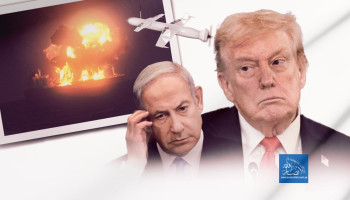
The broader plan is to elevate Zionist interests and fulfill the requirements of transforming the world into an entourage serving the comfort and well-being of Zionist Jews wherever they may be. “Trump” — with his personality that is inflated by psychological trauma, a superficial mindset, and barbaric conduct — was chosen for this decisive final stage.
Within a year of assuming his second presidency, he had, spread security chaos and diplomatic randomness across the globe. He dealt with capable nations — including some tied to the United States by longstanding relations — with arrogance, raised so-called “protection tributes,” and escalated tariff disputes. He mobilized an invasion-and-plunder gang, violating the sovereignty of some states, infiltrating others, kidnapping a head of state along with his spouse, and declaring his intention to seize lands and islands under the pretext of safeguarding American national security.
Through these actions, “Trump” seeks to leap over feelings of decline and race against time to engineer a transformation in favor of the Zionist movement. He perceives the current global moment as ripe for coexistence with this ambition, believing that waiting longer would usher in a new phase of independent power formations — particularly as many states slip beyond American dominance, exploit their strategic economic capacities, and move toward acquiring deterrent weapons. This trend coincides with the expanding map of actors who openly and consistently resist American bullying and reject its methodology of entrenching permissiveness.
This perceived danger has become a complex knot for the Zionist movement, pushing it to make up for lost time, intensify targeting measures, and accelerate the trimming of sources of strength in such states — oil, minerals, and other resources of wealth — while simultaneously destabilizing countries that have explicitly declared hostility toward American Zionism and taken up arms against it.
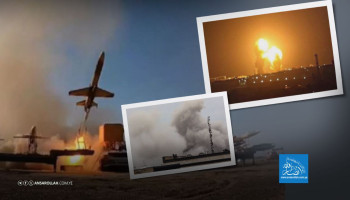
Among the countries is Venezuela, possessing immense wealth and serving as the starting point of a new wave of plunder under “Trump,” with other Latin American states waiting in line. Iran is also a country endowed with vast economic and military capacities and a declared target of attempted exploitation and theft. Russia, China, India, and Pakistan are likewise sources of tension for the United States and “Israel,” despite occasional diplomatic gestures suggesting otherwise.
Russia, in particular, is perhaps the only leading state that recognizes Washington does not advance a single step toward reconciliation unless it serves an agenda of subjugation. Its war with Ukraine is evidence of both American policy and Russian awareness, with Washington’s strategy exhausting Moscow. Claims emerging from American tactical circles about ending the conflict are transforming into weapons against Russia and tools to drain European capabilities.
The Resistance Axis Exposes the Fragility of Conforming States
Meanwhile, nothing appears capable of prompting the states aligned with Washington to exploit America’s current condition in order to distance themselves from chaos. Decades of passivity, have yielded them little beyond diminished standing in the White House’s confidence. They are often treated as burdens unless they continuously update their dependency through substantial financial contributions that bolster the U.S. economy and preserve its societal prosperity.
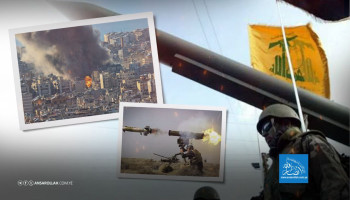
In contrast, the resistance axis — though limited in number and resources — continues to generate profound concern, exposing the fragility of the numerous states aligned with American projects and ambitions.
Washington, therefore, reportedly bets on subordinate states acting as shock absorbers for new transformations before their effects reach the Ameria itself. Tasks are distributed among them according to their capacities for influence. The silence of some and their isolation from global developments — even those affecting their own interests — is a required role at this stage. Not because their movement would pose a potential threat, but because any action on their part would likely be more of a burden, given that they have already mortgaged their security to American superiority.
A Shock Absorption Program
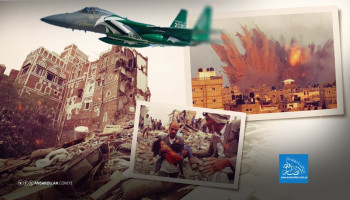
With a particular focus on the resistance axis, the United States is fully convinced that not only does the collective bloc pose a threat to its plans, but each individual state or force within it represents a danger in its own right. Yemen receives especially high priority, viewed as possessing the strongest will to end American domination of the world. Its exceptional positions have reportedly inspired not only surprise but admiration, suggesting that there is a hidden desire among some countries to rid themselves of the weight of American hegemony, though lacking the courage demonstrated by Yemen.
Washington’s concern, is that these hesitant states may eventually reach a transformative threshold and join the ranks of those rebelling against its will.
In response, the United States is pursuing a policy of deliberate disregard to restore its image as a superpower in the subconscious of the world. Experts are said to have devised a shock absorption program based on “denying the other the feeling of victory” by intensifying hostile approaches — whether toward traditional adversaries, emerging challengers, or any region globally. The more erratic and chaotic the action, the greater the perceived opportunity to repair fractures created by blows from resistance forces.
Thus, the global landscape stands between the formation of a resistance bloc and the decline of states that have dissolved themselves into alignment — with the United States navigating a decisive and turbulent phase in its pursuit of continued dominance.