A recent letter from Saudi Aramco to its international oil buyers highlighted a stark reality: Iran, not the United States, holds the key to reopening the global energy market, Reuters reported.
The letter noted that shipments for April could come from either the Red Sea or the Gulf, reflecting deep uncertainty about export logistics.
One regular Saudi oil buyer commented after receiving the letter amid the ongoing situation in the Gulf and the Strait of Hormuz: “I might as well call Iran to find out when this war ends so I can get my oil.”
The remark underscores the growing belief across the Middle East and beyond. While the United States and "Israel" could declare the war over at any moment, Iran will ultimately decide the duration of what the International Energy Agency has called the most severe oil and gas supply disruptions in history, as per the report.
US controversial statements vs. Iranian defensive actions
US President Donald Trump has repeatedly claimed that the United States is nearing victory in the rapidly escalating war, providing timeframes ranging from days to weeks.
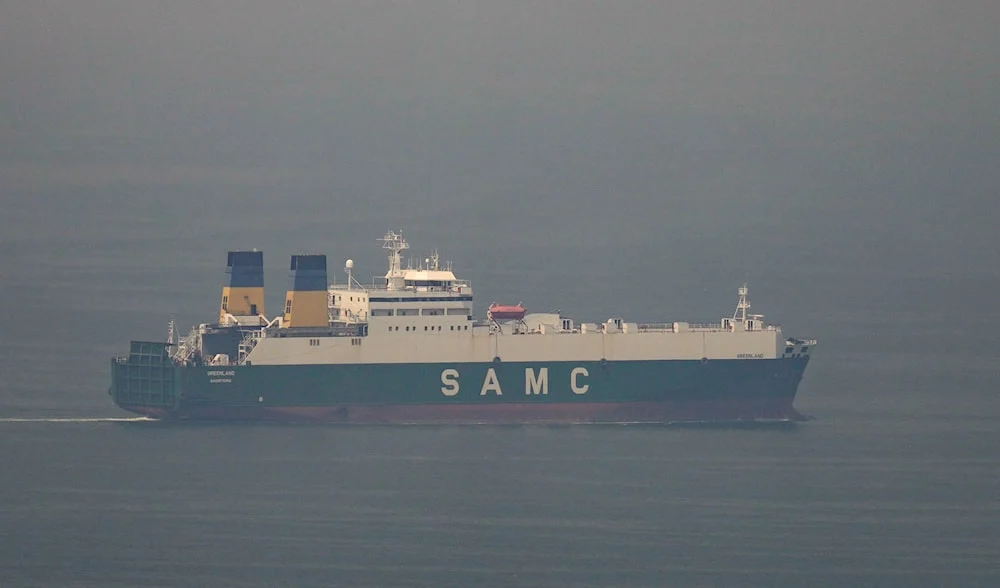
Meanwhile, Iran has struck back by launching drones and missiles against ships in the Strait of Hormuz, effectively shutting down roughly 20% of global oil and LNG supplies. These disruptions are affecting refiners, petrochemical plants, power stations, and energy-intensive industries worldwide.
Executives from Middle Eastern and Western energy firms warn that resuming shipping and production will take more than the US assurances of safety, even if fighting ends immediately.
Iran’s ability to produce and deploy low-cost drones gives it the capacity to disrupt or paralyze shipping long after any formal declaration that combat operations have ended.
Military escorts won’t solve the problem
Trump has suggested deploying US naval escorts and called on allies to send warships to secure the Strait.
However, a senior Gulf energy official noted that naval convoys alone cannot normalize traffic unless the US and "Israel" reach terms with Tehran, including a halt to attacks or threats on shipping. He added that his tankers would remain in port until Iran guarantees safe passage.
Neil Quilliam of Chatham House warned that if the US and "Israel" declare victory on terms Iran does not accept, Tehran may demonstrate it has not been defeated by causing further disruption with mines and drones.
Just hours after US strikes on Kharg Island, Iran’s main oil export terminal, drones also targeted the UAE’s oil loading hub in Fujairah, sending a clear message of widespread vulnerability.
RBC Capital’s Helima Croft, a former CIA analyst, said, “Iran is sending a message that there is no safe harbour in this conflict and that Washington will not control the terms of escalation."
According to the report, the Yemeni Armed Forces could further threaten the global energy supply by attacking Saudi Arabia's Red Sea port of Yanbu, the kingdom’s only alternative oil-export route.
Collapse in confidence
The crisis has shattered confidence in regional supply routes and exposed vulnerabilities in the Middle East’s energy infrastructure, said an Iraqi government energy advisor. Repairs are expected to take months, and insurance for shipments will be costlier and harder to obtain due to elevated risk.
Iranian attacks have forced shutdowns at refineries in Saudi Arabia, the UAE, Bahrain, and "Israel", pushing oil and gas prices up by as much as 60%.
Even a rapid resolution would likely result in weeks of market disruption, analysts, including those at Morgan Stanley, warned
Production cuts and market impact
Global energy companies may be slow to return to the Gulf, delaying restarts at some fields and risking reservoir damage, analysts from Rapidan Energy said.
Shipping closures have forced producers to cut output. Saudi Aramco has halted production at the Safaniya and Zuluf offshore fields, reducing output from OPEC’s largest producer by 20%.
Iraq, the second-largest producer, has seen a 70% drop in production, while the UAE, OPEC’s third-largest, has halved its output. Overall, Middle Eastern oil output is down by an estimated 7–10 million barrels per day, representing roughly 7–10% of global demand.
Qatar has fully suspended its liquefied natural gas production, cutting 20% of the world’s LNG supply and warning customers that shipments may not resume until May.
“It is simple — it is safety. We cannot risk lives,” an industry source said.
Source:Websites