
The Israeli high-tech sector is facing mounting strain as the ongoing war on Iran disrupts funding, staffing, and operations, with 71% of startups reporting damage to capital-raising efforts, according to a survey by the Israel Innovation Authority.
The survey, conducted during the third week of the US-Israeli war on Iran, among 637 high-tech companies, highlights widespread disruption across the sector, particularly among startups and growth-stage firms, including deep-tech companies.
Nearly half of the surveyed companies reported significant staff absences, with around 48% saying more than a quarter of their workforce is unavailable due to reserve military service, school closures, and security restrictions. Only 11% reported no absences.
Operational challenges are also mounting, as approximately 75% of companies reported that restrictions on international flights are affecting business activity. Around 35% cited significant disruption to meetings, conferences, sales, partnerships, and fundraising efforts.
Production, supply chains under pressure
Among manufacturing firms, which account for about 41% of respondents, roughly 76% reported disruptions to production capacity. About 24% described the impact as significant, while 6% said production had halted entirely.
Supply chains are also affected, with around 20% reporting major delays in importing raw materials and 8% stating that some supplies have stopped altogether.
These disruptions are translating into delays across the sector. Around 87% of companies reported setbacks in development timelines or product launches, including 42% with significant delays. Approximately 67% have postponed key milestones, with 22% reporting major postponements, particularly among smaller firms.
The survey underscores growing pressure on startup financing, with 71% reporting that the security situation has affected fundraising. Of these, 37% experienced delays, 23% said investors postponed decisions, and 11% reported cancellations.
The impact is more pronounced among smaller companies and those located in northern and southern areas, where cancellation rates are higher.
Looking ahead, only 13% of companies expect no change if the war continues. By contrast, 34% anticipate a slowdown, 22% expect project delays, and 18% foresee reducing activity or workforce. Around 12% warned that prolonged conditions could lead to company closures.
The data also point to a potential shift in the sector’s structure, with 31% of companies considering relocating operations abroad, while 9% considered but decided against it.
Officials warn of prolonged war impact
In comments to Calcalist, Israel Innovation Authority CEO Dror Bin said the duration of the war will determine the depth of the impact.
“The factor with the greatest impact is the duration of the war,” he said. “If it ends soon, the effects will diminish; if it continues, the problem will worsen. The main issue today is the absence of workers, which is delaying work plans and product development. If the war ends tomorrow, companies won’t make extreme decisions, but they will if it continues.”
He noted that while establishing overseas development centers remains complex for smaller startups, prolonged war could push companies to shift not only software development but also production abroad.
He also highlighted the impact of flight restrictions, saying they hinder investor access, limit participation in global events, and disrupt trade flows.
Fuel prices surge in 'Israel' as war on Iran drives costs up
The US-Israeli war on Iran is not only straining the tech sector in "Israel", but also severely damaging the energy sector.
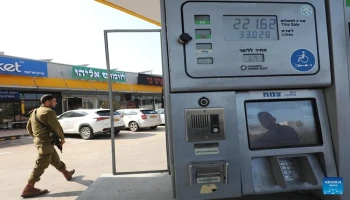
Fuel prices in “Israel” are set to rise sharply as the ongoing war on Iran continues to impact global energy markets and regional economies.
The Israeli Energy Ministry announced that the price of 95-octane gasoline will increase to 8.05 shekels per liter starting Wednesday, up from 7.02 shekels, marking a 14.7 percent increase.
According to the Ministry, the price hike is primarily driven by a nearly 50 percent increase in fuel prices across Mediterranean countries, linked to rising global oil costs amid the war.
The new price marks the highest level in more than three and a half years, approaching the previous peak of 8.08 shekels per liter recorded in July 2022.
The surge reflects the growing economic repercussions of the confrontation, which has disrupted energy flows and heightened volatility in international oil markets.
Source:Websites