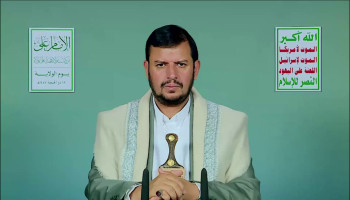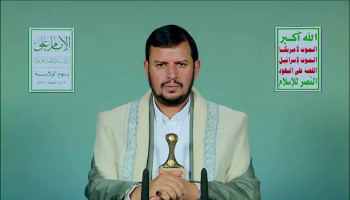

The Leader of the Revolution, Sayyed Abdulmalik Badr al-Din al-Houthi, emphasized the critical role of media in promoting economic boycott and shaping responsible discourse in support of the causes of the Islamic Ummah, warning against unchecked speech and the misuse of media platforms.
In his fifth lecture in the series “Indeed, This Qur’an Guides to That Which Is Most Upright,” the Leader underscored that speech—whether spoken or written—carries religious, moral, and social responsibility, and is not separate from ethical and spiritual accountability.
Sayyed Abdulmalik called on responsible media institutions to highlight the impact of boycott campaigns against products linked to the Israeli enemy and its allies, noting that media awareness plays a key role in strengthening public engagement and economic resistance.
He referred to past experiences in which boycott campaigns reportedly contributed to financial losses for companies supporting the Israeli enemy, citing examples of public mobilization in some countries that affected corporate revenues.
The Leader stressed that Qur’anic teachings include guidance on refraining from expressions that may serve hostile interests, emphasizing that speech should align with truth, justice, and support for legitimate causes, particularly the Palestinian cause.
He criticized the misuse of the concept of “freedom of expression” in Western discourse, saying it is selectively applied and often restricted when it concerns criticism of the Israeli enemy or solidarity with the Palestinian people.
Sayyed Abdulmalik warned that modern media platforms and social networks are widely used without ethical or religious controls, allowing misinformation, distortion, and propaganda to spread, often serving hostile political agendas.
He stated that the Israeli enemy places major emphasis on media and psychological influence, affirming the media battlefield as one of the most dangerous arenas in the broader conflict, and asserting hostile networks working to shape public opinion and redirect loyalties.
The Leader also criticized Arab and foreign media outlets that operate under the influence of Zionist policies, saying they mirror the narratives and terminology of the Israeli enemy while presenting themselves as independent or national platforms.
He further warned against media-driven “soft war” tactics aimed at misleading societies, spreading moral corruption, and weakening cultural and religious values, stressing that such efforts often precede military confrontation in enemy strategy.
Citing Qur’anic verses, Sayyed Abdulmalik highlighted the importance of accountability in speech, reminding that every word is recorded and subject to divine judgment, and urging adherence to truth, justice, and ethical responsibility in all forms of communication.
He emphasized that media discourse must be guided by Islamic values, including honesty, fairness, and moral integrity, and warned against slander, misinformation, and the promotion of hostility or corruption.
The Leader also criticized traitorous media voices that present themselves as national while aligning with Israeli enemy narratives, stating that they repeat the rhetoric of figures such as Netanyahu and other Israeli leaders.
He concluded by stressing that media remains a central front in the conflict, stating that its influence on public awareness, political alignment, and societal values makes it one of the most significant arenas of struggle.
Within this framework, media platforms are viewed as a primary tool used by the Israeli enemy to shape perceptions, redirect loyalties, and weaken support for resistance movements, alongside economic and military pressure.
Yemeni authorities frame counter-media efforts and boycott advocacy as part of a wider strategy to confront organized propaganda campaigns and to strengthen ideological and social resilience within the region.