Ansarollah Website — Report
The aggression against the Yemeni people has passed through multiple phases, employing a wide range of methods and forms of targeting. Over years of conflict, a complex web of developments has accumulated, collectively representing the most extreme forms of pressure, intertwined with regional ambitions and international power projection.
Direct military operations were merely one component of a broader system of moves and measures designed to maximize every opportunity for inflicting harm and dismantling Yemen’s social and political fabric, paving the way for imposing control over the country.
The strategy was predicated on exploiting the cumulative effects of these sweeping pressures to undermine the resilience for which Yemeni society is known. Yet, despite repeated ordeals and relentless brutality, the Yemeni people demonstrated extraordinary steadfastness, writing a chapter of resilience that has become a testament to human endurance.
Meanwhile, the aggressor continued to exhaust its own capabilities, moving from one plan to another without achieving any tangible accomplishment.
The military campaign did not follow an escalating trajectory; rather, it began violently and audaciously from the very first day, reflecting the force of the intentions behind it. The campaign evolved by opening the door to every conceivable military option, with no regard for constraints or red lines.
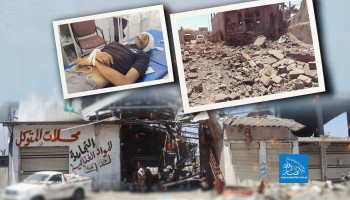
The target list expanded to encompass virtually everything, including vital infrastructure directly connected to the daily lives of civilians.
The persistence of such indiscriminate conduct left observers and commentators with a deepening conviction that what was unfolding was nothing more than a futile and senseless aggression, devoid of any meaningful purpose or result.
It also placed the international community before a moral and legal test, exposing the limits of its ability to confront blatant violations of international laws and conventions at the hands of tyrannical powers.
The Military Campaign and the Human Cost
The military campaign, alongside the relentless bombardment, involved intensive rounds of shuttle diplomacy and massive arms deals with the capitals of weapons-producing states. These deals resulted in a substantial flow of diverse and advanced weapons systems into the region, the impact of which was felt on the ground in Yemen.
Amid little more than monitoring and perfunctory statements, numerous human rights organizations documented violations of international law by Saudi and U.S. attacks, including the use of wide-area-effect weapons and munitions in populated areas and against civilian objects.
In several field reports, Human Rights Watch documented the use of cluster munitions and weapons with an “indiscriminate effect,” stressing that supplying the coalition with “advanced weapons, despite mounting evidence of attacks on civilian targets, exposed supplier states to allegations of complicity in serious violations of international humanitarian law.”
The coalition’s killing of women and children failed to bring about the political objectives sought through the operations. And as vital service facilities and infrastructure came under attack, growing segments of the Yemeni public became convinced that the military campaign had moved beyond its declared pretexts, ostensibly centered on what was termed “legitimacy,” and had instead assumed the character of coercion—seeking to subjugate the country and its people to the will of Riyadh and Washington.
This realization triggered a popular and battlefield-level backlash against any foreign intervention in the affairs of state governance or any infringement upon national sovereignty, leaving the international and regional actors caught in an increasingly complex cycle of attritional confrontation.
Starvation as a Tool of Political Pressure
Alongside the military operations, the blockade and economic measures emerged as among the harshest and most consequential forms of pressure on people’s lives.
Restrictions on the movement of ports and airports led to acute shortages of essential goods, including fuel, medicines, medical supplies, and food commodities, triggering successive waves of hardship that spread across the country’s various governorates.
On the financial front, the economic sector was subjected to early targeting of monetary institutions. The most prominent manifestations included what was described as the United States’ declaration of war on the national currency, followed by the transfer of the Central Bank’s financial functions, the suspension of public-sector salary payments, and the fragmentation of monetary policy.
These measures had an even deeper impact on people’s purchasing power and their ability to maintain basic living standards across different parts of the country.
A report issued by the United Nations Development Programme (UNDP), titled Assessing the Impact of the Conflict in Yemen, states: “The economic war and restrictions imposed on trade and financial activities caused cumulative damage that exceeded the impact of direct military operations; the interruption of salary payments and the deterioration of the exchange rate drove millions of people into extreme poverty, making Yemen’s humanitarian crisis one of the largest crises in the world.”
This economic pressure was accompanied by intensive intelligence activity, attempts to establish security cells, and the deployment of media campaigns aimed at undermining the home front and disrupting the social fabric.
At the same time, positions adopted by the United Nations Security Council repeatedly demonstrated an inability to produce fundamental solutions—or even, at the very least, to compel the coalition parties to conduct the war with a measure of restraint and avoid practices that endanger people’s lives. This further eroded confidence in the international system and in its role as a purported “guardian of peace.”
Awareness and the Surprise of a Strategic Shift
The Yemeni society’s steadfast determination to overcome these challenges and pressures was rooted in broad popular awareness of the nature of the schemes and the comprehensive targeting directed against the country.
Large segments of society rallied behind the leadership and the military, maintaining a state of social steadfastness that contributed to dismantling the pressure tactics one after another. Against this backdrop, the renewed resort today to old tools of escalation points to an inability to impose a new reality, and confirms that the indiscriminate targeting of facilities and essential service sectors is nothing more than an expression of the dead end confronting the colonial powers.
Yemenis do not rely on “clever tricks” or on dazzling observers, nor do they possess supernatural abilities. Rather, they draw their strength from the power of faith, sincerity of purpose, and the justness of their cause.
They therefore confronted every challenge from the conviction that failure and submission are fundamentally incompatible with their religious and moral principles. Yemen’s deterrent power was not built on an abundance of resources or exclusive access to sophisticated technology.
Rather, it rested first on God Almighty’s promise to grant victory to the oppressed, followed by taking the necessary practical measures. The result was a series of remarkable manifestations that shattered the aura of invincibility surrounding the forces of arrogance and domination.
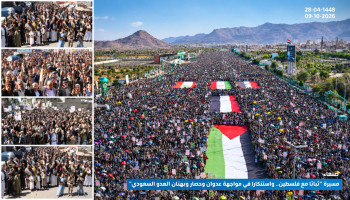
On this basis, Yemenis presented a notable model of steadfast adherence to legitimate rights. Their experience went beyond endurance, resilience, adaptation, and the ability to absorb the repercussions of aggression and blockade; it extended to surprising observers with unexpected military and deterrent capabilities that altered the calculations of the regional and international conflict and broke the paralysis of equations that had confined power and capability to a limited number of forces.
In its briefings on military developments in Yemen, the report of the United Nations Security Council’s Panel of Experts states: “The armed forces have managed to develop their military and tactical capabilities in an unexpected manner, moving from conventional defense to acquiring ballistic missile and long-range unmanned aerial vehicle technologies, thereby altering deterrence equations and disrupting the region’s security and military calculations.”
Over the years of aggression, the facts on the ground demonstrated the failure of the tactical bets placed on Yemen. While international assessments had anticipated that Yemen would be driven into a state of complete exhaustion and widespread “death” under the weight of economic warfare and blockade, developments on the ground exposed the flaws in those superficial readings of Yemen’s history and social character.
This transformation created a new reality in which the forces shaping the region are compelled to take Yemeni calculations into account in any future regional arrangements.
The Changing Rules of the Regional and International Game
It has become clear to Yemenis that the cost of submission and surrender is far greater than the cost of confronting and resisting foreign projects. For this reason, Saudi Arabia and the United States now find themselves on increasingly shaky ground as they witness the growing capabilities of the Yemeni armed forces and their imposition of new equations aimed at reclaiming seized rights and asserting national sovereignty by force.
The broader picture is clear: excessive pressure tactics have produced precisely the opposite of their intended effect. Rather than pushing Yemen into making concessions and entering into an unequal accommodation, they drove it toward building and developing strategic deterrent capabilities that have upended the political and military calculus.
These developments have generated new concepts of conflict that do not depend on international mediation, while succeeding in undermining the prestige of conventional military systems and challenging the traditional notion of numerical and technological superiority.
These shifts have produced unprecedented historic consequences, most notably by breaking the maritime and military monopoly long exercised by major powers such as the United States and its traditional allies, and by demonstrating the limited effectiveness of costly air-defense systems and arsenals against unconventional methods of warfare.
Their repercussions have extended to targeting the economic foundations of the Israeli entity, imposing forms of consequential maritime interdiction, and generating disruptions in global energy markets as a result of attacks on vital oil and gas supply lines and infrastructure.
These events also exposed the illusion of the “international protection umbrella” that Washington has marketed to its regional allies through the deployment of military bases and the extraction of trillions of dollars from those states.
At strategic and sensitive junctures, it became apparent that this protection remains conditional and is inextricably tied to the core interests of the United States and the Israeli entity. In this sense, Yemeni steadfastness has reinforced the reality that national will and unwavering commitment to one’s rights can bring even the most formidable schemes of domination crashing down—and redraw the map of the region as a whole.