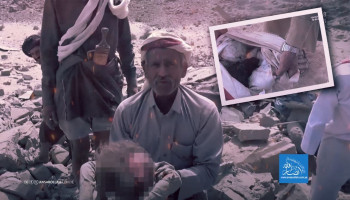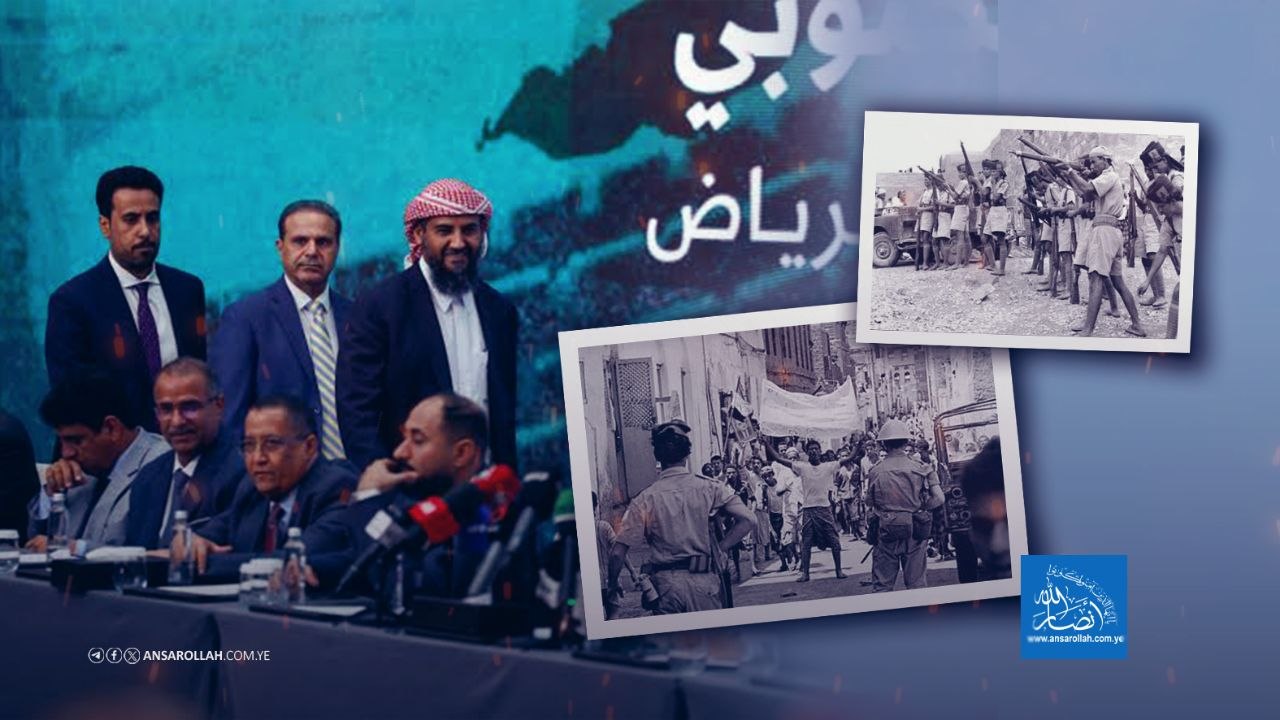
The 63rd anniversary of the glorious October 14 Revolution is approaching. The revolution was launched from the mountains of Radfan to expel the British occupier from the south of the homeland. Its anniversary coincides with the return of a new occupier that has imposed its control over those areas for twelve years. This scene brings the struggle for liberation and independence back to the forefront and places the people of the southern governorates before the responsibility of uniting ranks with their free compatriots across the country to drive out the Saudi occupier and achieve freedom and independence for Yemen—all of Yemen.
Despite the Saudi enemy’s resort to various methods of repression against those resisting its presence in the southern governorates, popular movements rejecting the occupation continue. These governorates periodically witness protests demanding an end to the Saudi presence and the withdrawal of its forces. These movements hold the Saudi enemy responsible for economic deterioration, rising living costs, and the collapse of essential services, foremost among them electricity, healthcare, and education, as well as worsening security conditions and the spread of theft and looting. These developments come amid popular demands to restore security, improve living conditions, and end foreign control over the country’s resources.
The Will of Peoples Is Capable of Winning Their Freedom
In this context, Deputy Minister of Local and Rural Administration Sheikh Nasser Al-Mahdhar stresses that the significance of the 63rd anniversary of the October 14 Revolution lies in its coinciding with the Saudi occupation of the southern governorates, which has exhausted their people and plundered their country’s wealth and resources. This, he says, makes action to expel the occupation, achieve independence, and reject foreign domination over the country imperative.
In an exclusive statement to the Ansar Allah website, Al-Mahdhar says the October 14 Revolution represented a pivotal milestone in the Yemeni people’s struggle, culminating in the expulsion of the British colonizer from the south of the homeland. He emphasizes that the will of peoples is capable of winning freedom and reclaiming sovereignty, regardless of disparities in resources and capabilities.
He notes that comparing the era of British occupation with the current Saudi occupation reveals common features, including violations of national sovereignty and attempts to control the country’s resources. He points out that contemporary manifestations of foreign influence include plundering wealth, fueling divisions among local factions, and employing affiliated forces to serve external agendas, alongside deteriorating living and security conditions and declining public services.
He stresses that drawing lessons from the revolution requires strengthening unity, rejecting subordination, and upholding national identity. He calls on the people of the southern and eastern governorates to continue their struggle to reclaim national decision-making and end foreign control.
Al-Mahdhar also points out that the armed forces’ operations target military build-ups affiliated with the Saudi enemy, not the people of the southern and eastern governorates. He stresses that the battle centers on confronting guardianship and occupation, not fighting the people of the homeland.
The people of the southern governorates have suffered under the Saudi occupation, which has weighed heavily upon them, curtailed their freedoms, and plundered the country’s wealth over the past twelve years. This has repeatedly driven them into public squares and streets to demand an end to the occupation and the departure of the Saudi occupier from their lands.
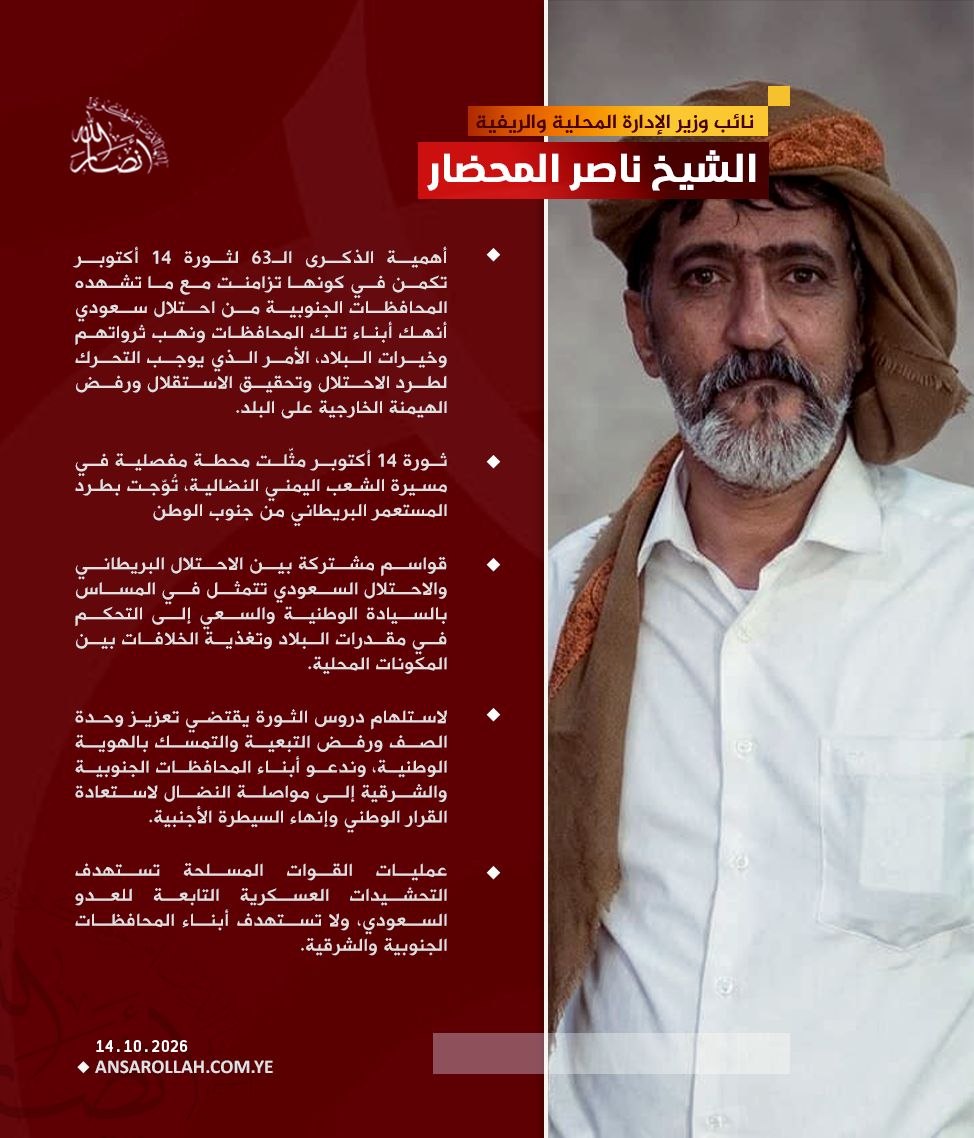
On this issue, Lahj Governor Sheikh Ahmed Hammoud Jureib Al-Subaihi warns of the consequences of Saudi influence in the southern and eastern governorates. He stresses that the Saudi enemy represents an extension of foreign domination projects targeting national decision-making and Yemeni sovereignty, placing the country’s wealth and resources under foreign exploitation and control.
Speaking to the Ansar Allah website, Jureib says the Saudi enemy’s expansion into the southern governorates and its violation of national sovereignty impose a historic responsibility on the people of these governorates to defend the country’s independence. He recalls the revolution through which Yemenis won independence from British colonialism despite the vast disparity in strength and weaponry.
He notes that the manifestations of current foreign influence extend beyond a military presence to include the plundering of sovereign resources and the destruction of national assets, amid worsening living and economic conditions and growing human suffering. He holds foreign powers responsible for the crises facing the southern governorates. He stresses that violations and the plundering of resources will not be erased by the passage of time, affirming the need to pursue the Saudi enemy and its instruments before international courts.
Sheikh Jureib calls on the people of the southern and eastern governorates to draw inspiration from the lessons of the October Revolution, refrain from dragging their sons into battles that serve foreign interests, and uphold their right to sovereignty, independence, and control over the country’s wealth and resources. He also calls on the people of the southern governorates to stand alongside the Yemeni armed forces to drive out the Saudi enemy and achieve freedom and independence for Yemen.
The October 14 Revolution: A Model of Unity in Yemen’s Struggle
The 63rd anniversary of the October 14 Revolution expose the false positions of mercenaries of the Saudi aggression and the mobilization forces serving it. These groups seek to confront their own free compatriots, who are waging fierce battles against the Saudi enemy to liberate Yemen. They seek to serve the enemy and its agenda in exchange for a few dirhams, exposing their subservience and betrayal of the homeland. How can these people celebrate the anniversary of a revolution that overthrew British occupation while fighting relentlessly—and being sent into battle as fuel—to ensure the survival of the new Saudi occupation?
On this issue, Hadramout Governor Major General Luqman Baras stresses that the October 14 Revolution represents a historic model of unity in Yemen’s struggle. He says freedom fighters from different parts of the country united their efforts against British colonialism, ultimately achieving national independence on November 30, 1967, despite the challenges and disparities in resources.
Speaking to the Ansar Allah website, Baras describes the October 14 Revolution as a historic occasion for recalling the lessons of the national struggle against foreign interventions and strengthening unity to reclaim national decision-making and achieve independence, amid Saudi interventions and ambitions in the southern and eastern governorates.
Baras believes that confronting foreign interventions today requires unifying national positions, rejecting guardianship and subordination, and preventing foreign powers from exploiting internal divisions to impose their domination over the country and its resources. He stresses that the Yemeni people will not accept any infringement on their sovereignty or relinquish their independence.
The Hadramout governor calls on community leaders and respected figures in the southern and eastern governorates, particularly the people of Hadramout, to strengthen solidarity and national unity and refrain from sending their sons into battles that serve Saudi interests. He emphasizes the need to direct efforts toward confronting foreign interventions and safeguarding national resources, ultimately securing the withdrawal of foreign forces, reclaiming national decision-making, and achieving full independence.
.jpg)