Ansarollah Website . Report |
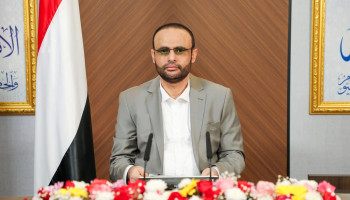
As a value-driven, moral, and principled choice, the President of the Supreme Political Council, Mahdi al-Mashat, directs the acting governor of Taiz to activate the presidential pardon mechanism within the province, mirroring what took place in the Western Coast districts.
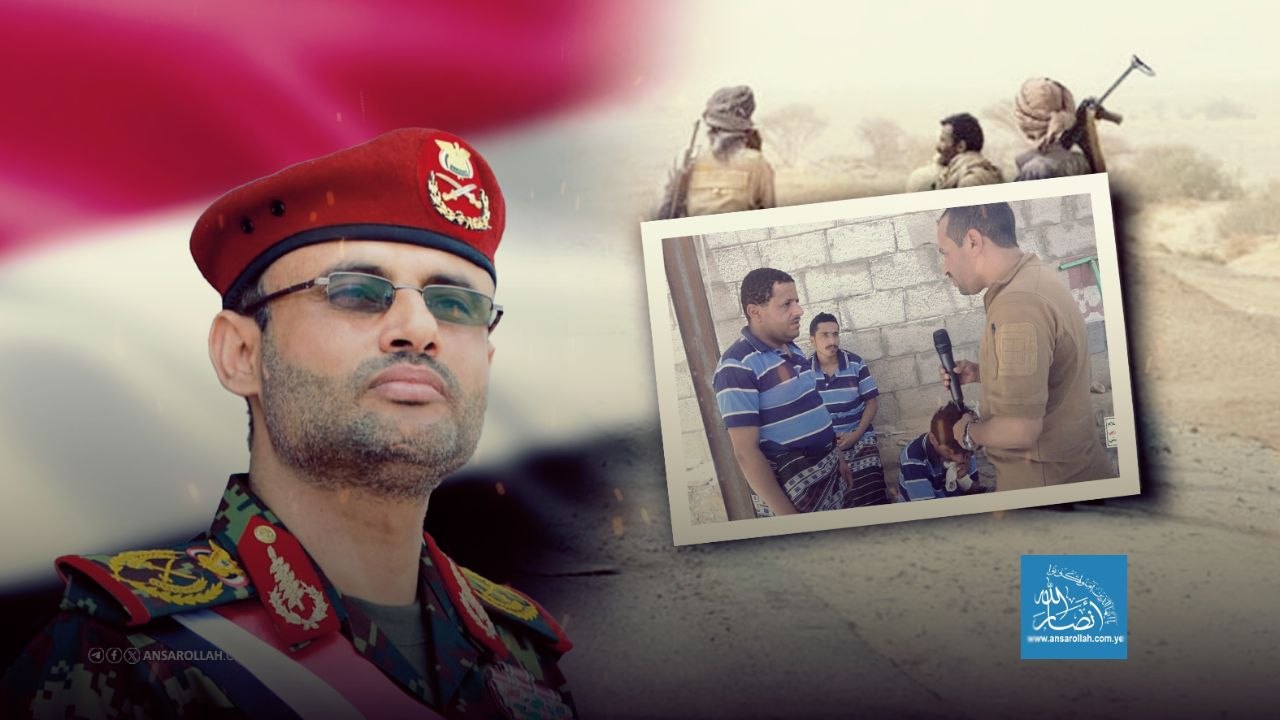
President al-Mashat also affirms that the armed forces are committed to providing security for anyone who does not obstruct operations against Saudi military build-ups, stressing that the pardon decree encompasses "misled individuals" who leave combat positions and commit to staying in their homes. This ethical stance, which continues to receive a positive echo, had initiated its approach last month on the Western Coast, in the wake of which the provinces of Taiz and Hodeidah welcomed hundreds of returnees.
This orientation goes beyond maneuvers, reflecting in practical behavior on the ground, which has been well-received by the societal sphere. This motivated social figures and dignitaries to contribute and participate, making the general amnesty decree an action expressing a sense of responsibility toward misled individuals by granting them safe paths to lay down arms and return voluntarily to their villages and homes without fear of reprisal, moving past the language of media bickering, and working to establish civil peace as a natural and sustainable choice stemming from the values of Yemeni society.
The presidential pardon makes the idea of peaceful return and the sparing of blood a realistic and sole option for individuals who were engaged in the camps of the Saudi adversary; for them, war is no longer anything more than a horizonless inferno, while the general amnesty represents the true lifeline that returns them to the ranks of their people and families in dignity and safety.
From an intellectual and cultural standpoint, the decree's reliance on literature and concepts with religious roots derived from spiritual texts and teachings—such as pardoning when able, granting safety, and making space for the return of those misled or affected by mobilization—represents a parallel weapon in the battle. Furthermore, the humanitarian aspect of the pardon decree stands out in its reflection of a conscious and aware reading of the nature of Yemeni tribal and social society; and what this society needs in terms of affection, cohesion, united ranks to face challenges, and the mobilization of energies to build the nation. Instead of going against this toward retaliatory pursuits and bloody zero-sum battles within densely populated cities like Taiz—which could create extended historical blood feuds and destroy already crumbling infrastructure—a return is made to what reflects Islamic tolerance, and opening the door for the voluntary return of the misled as a strategy capable of dismantling the incubator of the supporting and financing enemy, and consecrating the value and moral approach with which the leadership deals.
This reinforces the specific and announced objective of the armed forces, which is expelling Saudi mobilizations, restoring the land, and establishing stability and sovereignty. This grants misled individuals an exit that preserves their dignity and personal security, encouraging their families to exercise local societal pressure to pull their sons away from death furnaces and battlefronts that have come to lack reliable political or financial cover.
Preempting the Opportunity for the Saudi Enemy
Stemming from "pardoning when able," the pardon comes from multiple considerations; it is an authentic expression of the value system upon which the leadership relies in managing state and popular affairs, which is urged by Islam calling for the dissemination of the causes of brotherhood. On the other hand, it affirms control over the land and victory in the liberation battle, as it occurred on the Western Coast following the expulsion of Saudi mobilizations, and similarly today in areas of Taiz province after Saudi mobilization reached its peak to plunge it into blood and ruin. This cements a new field reality: that the coastal geography upon which Saudi Arabia and America bet as a strategic support line has been decided, and the Taiz districts liberated by the Yemeni army have drawn a new geographic reality making the choice of continuing to fight akin to military suicide.
The leadership realizes that Saudi Arabia has not entered a land without corrupting it and making its honorable people abased. In Taiz, it practices the same opportunistic behavior, dangling money before youth after impoverishing them with its policy for twelve years, then pushing them into the furnace of death to fight for its objectives.
Taiz and its youth are no exception, but its location makes it a target of ambition, not only with the intent of controlling it, but also to ensure a sustained explosion of the social fabric, achieving for the enemies a continuous state of conflict among Yemenis, distracting them from external infiltration attempts, and ultimately exhausting them and then controlling them and the state.
For this reason, the leadership is aware that preempting the Saudi adversary from achieving its objectives requires—continuously—recalling such ethical, human, and before that, religious orientations, especially since the city's youth fall within the target circle of the enemy interested in stripping all Yemeni youth of their national and faith identity.
Proceeding from these convictions, the general amnesty produced its natural effect, giving many misled individuals a sense of security and the motivation to make the decision to drop weapons and engage in the battle of state-building, instead of carrying the enemy's pickaxe to demolish it, and ending the hopes of any transformations so that it and its people may enjoy goodness and stability.
May the Adversary Read Events with the Eye of Reason
General amnesty following battles generally works as a tool for consolidating and securing field gains; it allows for the absorption and securing of new geography without needing to drain energies in conducting cleansing battles or antagonizing the people of those regions, but rather through opening the door of "organized surrender" and securing rear lines. In addition, the issuance of the pardon from a position of field strength strikes down the literature of skepticism; the fear of "reprisal" or "treachery" that typically accompanies the breaking of fronts is broken when the besieged see that the victorious party is the one taking the initiative to lay down safety rules and implement them practically in the decided districts. This turns the amnesty from a mere refuge for the defeated into a pathway to end the conflict at the lowest costs, and places whoever rejects it in the position of spurning the only lifeline available to them.
The Saudi adversary would do well to read events with the eye of reason; its successive downfalls are a natural matter because its attempt to look down on the people of the land and make them the fuel has become a feeble policy; for those belonging to this nation may rebel against a reality and a policy, but they do not rebel against a homeland, history, and civilization, and this matter quickly leads to restoring the reality of the Yemeni with his great history.
"Pardon" Ends the Impact of Mobilization Operations
In Taiz, victory was born with cooperation, so the citizens in Taiz were a supporting aid, sometimes by communicating with their sons in the enemy ranks and convincing them to return home, and other times by a supportive contribution to expel those coming to disturb the peace of the province's security, through spreading fear, hunger, forms of irresponsible actions, and excessively leaning on Riyadh. However, most importantly, the presidential pardon decree put an end to what the enemy tried long to broadcast into the souls of the misled that there would be violence and intentions of revenge from the armed forces. It is well-known in battles that the fear of "reprisal" or "treachery" that usually accompanies the breaking of fronts is broken when the besieged or those losing the confrontation see that the victorious party is the one taking the initiative to set safety rules and operationalize them practically in the decided districts.
Likewise, the amnesty turns from a mere refuge for the defeated into a pathway for reviving hope and viewing reality objectively and realistically, far from being tense due to mobilization and indoctrination operations, and makes whoever rejects it in the position of spurning the only lifeline available to them. In this sense, the pardon decree did not pave the way for a decisive outcome, but rather crowned the field decisive outcome and codified its results, to turn from a tactical paper into a document consolidating a fait accompli, and imposing a new equation in Taiz and the Western Coast.
The Duality of Competence and Magnanimity
The philosophy of absolute sovereignty is embodied in the presidential pardon when firm field command over the land intersects with the civilizational and value depth of the Yemeni personality. Sovereignty thus transcends the abstract legal definition—which philosophers speak of as the suspension of the text or the exercise of the exception—to manifest itself as an act of Yemeni will stemming from the duality of "competence and magnanimity."
The ability to issue a pardon and enforce its effects from a position of control and field decisiveness, as appeared in the extension of its application from the Western Coast to Taiz, represents the clear imprint of possessing enforceable decision-making power on the ground. The authority that holds the initiative on the ground, controls its geography, and imposes its military equations is the only one that possesses "granting safety" and bypassing the repercussions of conflict.
Therefore, the pardon issued from a position of strength and empowerment is not read as a bargaining equation or weakness, but as an explicit declaration that the field and political map has been settled, and that the state is now acting from the position of supreme reference that holds the keys to war and peace without external dictates or coercions.
Accordingly, it is affirmed that field power alone, regardless of its firmness, is insufficient to forge stable sovereignty if it is not surrounded by value-based and moral legitimacy. This is authentically embodied by the armed forces stemming from spontaneous behavior without posturing or maneuvering, where their conduct—whether with prisoners or returnees after laying down their weapons—manifests in the tolerance of noble traits and customs.
In deeply rooted Yemeni culture, victory was never measured by the depth of vengeance or excessive spite, but by the capacity of the one who decided the battle to embody the values of pardoning when able, sparing blood, and having a broad chest to gather the national diaspora. Here, the presidential pardon recalls the "values of Yemeni custom," which views pardon and safety as a crown for the capable and a safeguarding of the social fabric from tearing and permanent stigma.
Thus, the concept of "absolute sovereignty" merges with the Yemeni identity, so that the practice of pardon bears witness, on the one hand, to the heavy hand that decided the battle and grasped the decision of geography, and on the other hand, to the wisdom of the mind and the tolerance of the Yemeni self that rises above reopening wounds to open the door of return for the sake of rebuilding the social contract. It is a true embodiment of sovereignty when it speaks the language of the field and acts with the ethics of knights.