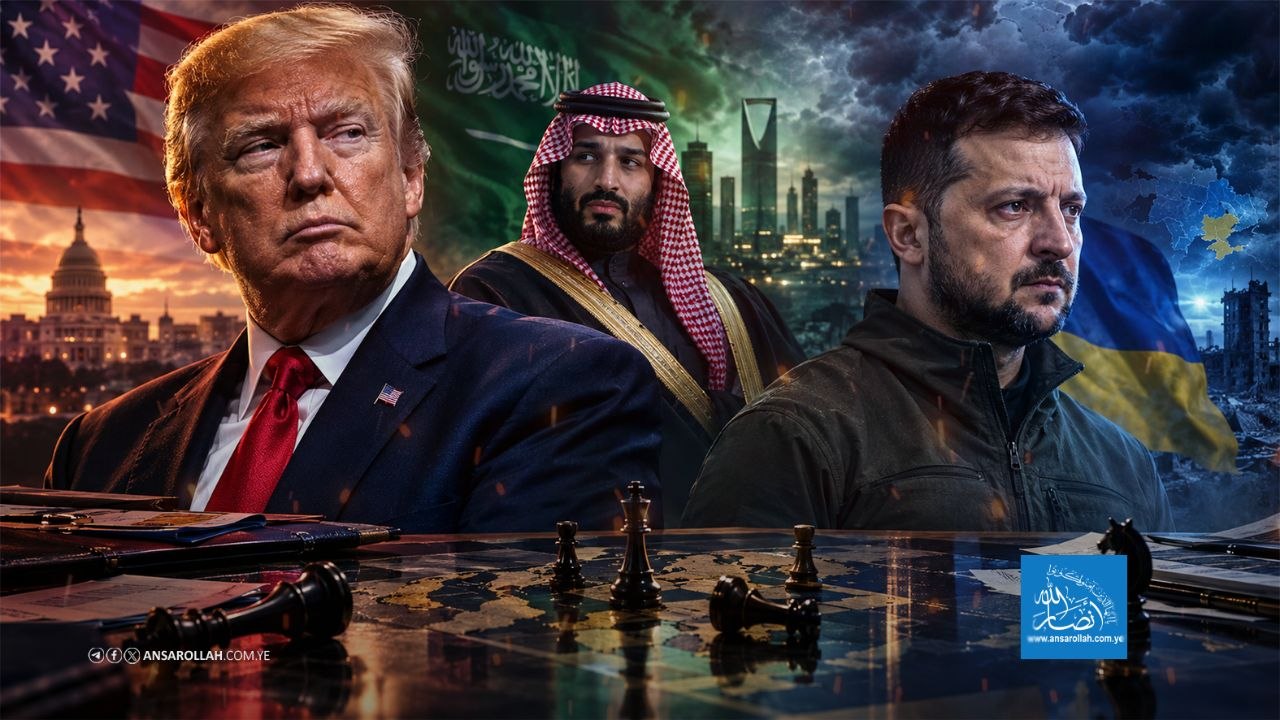
In the theater of international politics—specifically American politics—there are no eternal friendships or sacred covenants; there are only shifting interests, bought-and-sold alliances, and allies offered as sacrifices on the altars of immediate tactical gain. From this perspective, one can read the dramatic shift in the American stance toward the Russian-Ukrainian war. President Donald Trump has found in reconciliation with Moscow a cheaper and easier way out than an open confrontation with a regional axis that has become a genuine source of pressure on Washington.
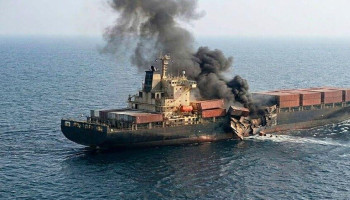
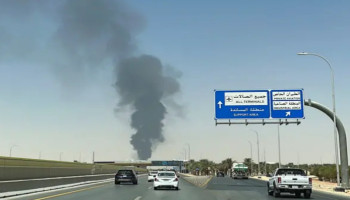
Slumping toward an understanding with the Kremlin, signaling the cutoff of intelligence and satellite support for Ukrainian drones, and even threatening to replace President Volodymyr Zelenskyy himself were not the products of a well-studied strategic decision. Rather, they were responses to narrow pragmatic motives. The underlying premise is that America—having failed to break Tehran's will in the Strait of Hormuz, and mired in a similar failure at Bab el-Mandeb where Yemeni strikes halted Saudi oil exports and disrupted the Kingdom's air navigation—is now searching for an easy victory in another file, even if the price is a weak ally named Ukraine. This is especially true given that rising oil prices have continuously impacted American markets amid uncertainty over Trump's commitments to opening the Strait of Hormuz, making a return to Russian oil less costly.
Failure in Hormuz and Bab el-Mandeb: The Hidden Condition for Reconciliation with Moscow
The American shift toward Russia did not happen overnight; it is the culmination of a series of successive failures in confronting regional parties that have demonstrated the ability to impose their own equations. In the Strait of Hormuz, Iran has continued to hold the card of economic strangulation without Washington finding a way to untie it. In Bab el-Mandeb, the Yemeni Armed Forces proved they could strike Saudi depth and disrupt energy and aviation arteries—a scene that exposed the fragility of American deterrence when facing adversaries who are not measured by traditional balances of power.
Here, the equation reveals itself: when the greater pole fails to impose its will in two vital theaters, searching for an exit in a third theater becomes a tactical necessity. Reconciliation with Russia in this context is not a strategic concession as much as it is a sphere-of-influence deal: Washington closes the Ukraine file, while Moscow undertakes to regulate the rhythm of conflict in other pressure zones and secure energy at acceptable prices. As for Zelenskyy, he was nothing more than a bargaining chip in this trade-off, exactly like his predecessors among small allies in other regions.
Zelenskyy Lesson: Will bin Salman Take Heed?
This brings us to the fundamental question: If this is the fate of a European head of state who enjoys broad Western support, what of the Gulf allies who built their security bets on an American umbrella that could shift at any moment?
Bin Salman has witnessed how Zelenskyy was left alone to face Russian missiles after being the star of speeches in Congress, and how he transformed from a pivotal ally into an obstacle that must be bypassed. The exact same applies to Riyadh. Since the beginning of the aggression against Yemen, the Kingdom has operated within the orbit of American interests rather than according to an independent national project. When Yemeni strikes hit oil installations and air navigation, Riyadh found nothing but complete American silence, as if the message to the capital was: This is your battle alone, and we are here only for our own interests.
Riyadh: A Tool, Not the Owner of a Project
What reinforces this argument is that the Kingdom—since establishing its strategic relationship with Washington—has never built its own regional project, remaining instead a tool for executing external agendas, some American and some Israeli. When weapons are bought, bases are opened, and proxy wars are fought, the natural result is that the state transforms from an actor into a passive recipient, and from a partner into a subordinate. Thus, when American priorities shift, the ally finds itself in direct confrontation with its adversaries, stripped of cover and guarantees.
Lessons from Kyiv to Riyadh
What happened to Zelenskyy is not a passing incident, but a fixed rule in American politics: when crises intensify, weaker allies are offered as sacrifices for reconciliation with stronger adversaries. The Kingdom of Saudi Arabia—with its geopolitical position and oil weight—is not immune to this fate unless it redefines its national project away from bets on American protection that time has proven to be a mirage. Above and beyond all this, Riyadh must rush to resolve the Yemeni file before things spin out of control. The wise person is the one who takes heed before their turn comes in the next chapter.
Do you have any specific formatting or stylistic adjustments you would like to apply to this translation, or is there another document you would like translated next?