
Iranian Foreign Minister Abbas Araghchi said the memorandum of understanding (MoU) “will declare an end to the war, including in Lebanon,” stressing that no final agreement has yet been signed and that “changes may still occur on certain issues.”
In an interview for Iranian state TV, he noted that “no understanding has been signed yet,” adding that he prefers “to discuss the details of the potential understanding once it has been finalized.”
Araghchi said the negotiations will proceed in two phases, explaining that “the nuclear file has been deferred to the final agreement, and the text of the Memorandum of Understanding (MoU) has been revised many times so far.”
He added that “the US nuclear demands at this stage were entirely unacceptable to us,” warning that if the first-phase understandings are not implemented, “we will not proceed to the second phase, and we should expect obstacles to be placed in the way by the other side.”
"We will never leave Lebanon to face its challenges alone"
On war and sovereignty, Araghchi reiterated that “the MoU will declare an end to the war, including in Lebanon, and we will never leave Lebanon to face its challenges alone.”
Araghchi explained that ending the war within the framework of the understanding also means the withdrawal of “Israel” from the occupied areas in southern Lebanon, stressing that Tehran had informed the other party of this “quite frankly”.
He said the agreement would include commitments that “the United States commits not to initiate any war and not to resort to threats,” and that “the United States and Iran commit to respecting each other's sovereignty and refraining from interference in one another’s internal affairs, on the basis of sovereign equality.”
Regarding the Strait of Hormuz and blockade issues, Araghchi stated that “the issue of the Strait of Hormuz and the lifting of the maritime blockade are included in the MoU, and a specific mechanism has been established for Iran’s frozen assets.”
"Fees will be charged for services in the Strait of Hormuz"
Furthermore, he emphasized that “there is no doubt that the Strait of Hormuz falls under the sovereignty of Iran and Oman, and it is not an international waterway,” adding that “the future administration of the Strait of Hormuz will not be the same as it was in the past, and no one will be permitted to infringe upon the sovereignty of Iran and Oman over the strait.”
The top Iranian official also said that “fees will be charged for services in the Strait of Hormuz, and these services will no longer be free,” and that “the US naval blockade was the first issue to be addressed, and it was emphasized that it must be lifted.”
"None of our assets can remain frozen"
On reconstruction and frozen assets, he said, “the issue of reconstruction was raised within the framework of a reconstruction and economic development plan, and its mechanisms will be agreed upon during the upcoming negotiations.”
He added that “Iranian frozen assets will be released under the Memorandum of Understanding, should it be signed, and none of our assets can remain frozen,” noting that “a reconstruction plan has been taken into consideration to compensate for the losses and damages incurred by Iran.”
On deferred issues, Araghchi said “two issues have been deferred to the final agreement: the lifting of sanctions on Iran and the nuclear files,” adding that “the decision on enrichment and the stockpile of enriched materials will be made in the final agreement,” while maintaining that “the only way to address the issue of 60% enriched material is through its dilution within Iran.”
have been deferred to the final agreement: the lifting of sanctions on Iran and the nuclear files,” adding that “the decision on enrichment and the stockpile of enriched materials will be made in the final agreement,” while maintaining that “the only way to address the issue of 60% enriched material is through its dilution within Iran.”
"The decision will be made collectively"
Addressing internal oversight, he said “Iran’s Supreme National Security Council has full oversight of the negotiations,” noting that a dedicated committee “oversees the negotiations and submits reports whenever necessary.”
He added that “there are both supporters and opponents of the text within the Supreme National Security Council, but ultimately the decision will be made collectively.”
He further described the MoU as “less than two pages long,” saying that “every word in it has been scrutinized and reviewed repeatedly with the utmost precision.”
He concluded that once negotiations are completed, “the agreement will be announced, and the signing in the first phase will take place remotely.”
Earlier today, Araghchi said that Tehran and Washington are closer than ever to reaching a memorandum of understanding, signaling potential progress in ongoing negotiations between the two countries.
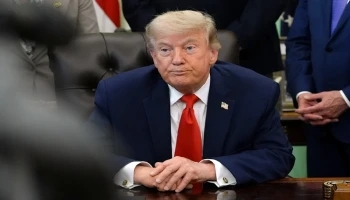
His comments also follow growing speculation about an imminent breakthrough after US President Donald Trump said Thursday that a deal with Iran could be finalized soon, although Iranian officials have maintained that no draft memorandum has yet been formally approved.
Source:Websites