
Ansarollah Website – Report
At a time when execution was expected to begin on one of the largest prisoner exchange deals with the U.S.–Saudi aggression coalition, and as thousands of Yemeni families eagerly anticipated the return of their loved ones from enemy detention, this humanitarian dossier has reverted to a state of deadlock. This setback follows a return by the adversary and its proxies to a pattern of stalling and procrastination.
On Friday, the National Committee for Prisoners' Affairs announced that the opposing side had reneged on the agreed-upon terms. This reversal has delayed a deal scheduled for implementation under a timeline finalized during a negotiation round that spanned more than three months.
This development thrusts one of the most complex humanitarian issues of the conflict back into the spotlight. Critics argue that the coalition's recurrent delays demonstrate a lack of serious commitment to resolving this sensitive issue. The complexity stems not only from the substantial number of prisoners, detainees, and abductees, but also from its direct impact on thousands of families enduring a painful waiting period. This persists despite international conventions dictating that prisoner-of-war issues must remain insulated from political and military leverage, managed strictly under the rules of International Humanitarian Law (IHL), which designates this file as purely humanitarian.
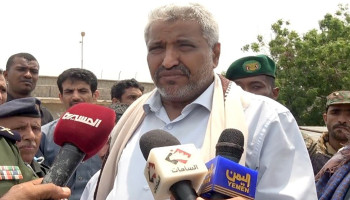
The announcement by Abdul-Qader al-Murtada, Chairman of the National Committee for Prisoners' Affairs, regarding the breakdown of the deal came just weeks after widespread optimism followed the conclusion of the latest negotiation rounds. Al-Murtada had described those talks as among the most difficult and complex due to the thorny issues on the table, including the case of the forcibly disappeared, which has remained one of the most sensitive aspects of the file for years.
The Largest Deal in Years
The final round of negotiations lasted over three and a half months, culminating in an agreement that many observers viewed as a significant step forward. Upon his return to Sana'a, al-Murtada announced that the agreement encompassed the release of 1,200 prisoners and detainees from the national side in exchange for 580 from the opposing side, making it one of the largest deals brokered in recent years.
The significance of the agreement lay not only in its volume but also in the specific names included on the lists. Al-Murtada explained that the deal featured 400 civilian abductees, a move reflecting an expanded scope of negotiations to include groups underrepresented in previous rounds, thereby lending the agreement a broader humanitarian dimension beyond a conventional exchange of combatants.
Furthermore, al-Murtada revealed that the negotiating team succeeded in including more than 50 individuals who had been forcibly disappeared for nearly a decade, despite prior denials of their detention by the opposing side. He framed this development as one of the most prominent breakthroughs of the recent talks, given its direct impact on dozens of families who had remained ignorant of their relatives' fates for years. At the time, al-Murtada affirmed that the agreement was binding and that the National Committee viewed it as an initial step toward larger, comprehensive exchanges until all prisoners are freed—sparking profound hope among hundreds of families.
From Optimism to Gridlock
However, this breakthrough was short-lived. The National Committee for Prisoners' Affairs announced on Friday that the process had stalled due to the opposing side's non-compliance with the agreed terms, shifting the atmosphere from optimism back to disillusionment for the families involved.
Brigadier General Abdul-Qader al-Murtada held the opposing side fully responsible for delaying the deal. He emphasized that the Committee was fully prepared to proceed with execution according to the agreed schedule and had finalized all required procedures without delay. Al-Murtada stated that the Committee fulfilled all its obligations and stood ready to initiate the exchange, but the lack of commitment from the other side disrupted the process at the eleventh hour.
He added that the impediments extended beyond mere delays; the opposing party also refused to include the remaining prisoners in their custody into the current deal, violating prior understandings reached during negotiation rounds. Al-Murtada confirmed that the Committee had notified both the United Nations and the International Committee of the Red Cross (ICRC) of its full readiness to execute the agreement on time, demonstrating that the delay originated entirely from the other side’s failure to fulfill its negotiated commitments.
Additionally, al-Murtada accused the opposing side of attempting to bypass several core clauses of the agreement. He asserted that bypassing or ignoring these points precludes the completion of an integrated deal, as those clauses constitute foundational elements of the consensus upon which the agreement was built. He reiterated that the Committee remains committed to executing the deal the moment the opposing side adheres to all agreed-upon points, holding them fully accountable for any further delay or ultimate failure of the agreement.
Renewed Humanitarian Suffering
Yemeni families remain the primary victims of these recurring deadlocks, which have come to define the perceived intentions of the opposing side. The national side routinely engages in marathon negotiation rounds lasting for months to secure an agreement, only to see the Saudi-led coalition abdicate its commitments, plunging families into a cyclical loop of hope and anxiety. Each round opens a window of hope for hundreds of families, only for that window to be shuttered by a new impasse.
Behind the statistics lie painful human narratives: parents who have not seen their children in years, mothers waiting for news to dispel years of anguish, and children who have grown up knowing their fathers only through photographs and memories. Consequently, humanitarian organizations view the prisoner file as one of the most urgent issues, as it directly concerns the fundamental human right to liberty and family reunification, independent of political considerations.
Insights from Past Experiences
Although the prisoner dossier has remained tied to political and military negotiation tracks throughout the years of conflict, International Humanitarian Law views it from an entirely different paradigm—as a purely humanitarian matter that must not be subjected to political bargaining. The Geneva Conventions and rules governing armed conflict emphasize the necessity of respecting the rights of prisoners and detainees and working toward their release at the earliest opportunity to preserve their dignity and alleviate family suffering.
From this perspective, any delay in implementing prisoner exchange agreements translates operationally into the protracted suffering of thousands of families. Accordingly, the UN and the ICRC have consistently sponsored these negotiation rounds on the premise that this file represents a vital confidence-building measure. Nevertheless, past experience indicates that whenever this file nears a critical juncture toward reuniting prisoners with their families, it falters just prior to execution—a pattern that observers frequently attribute to obstructions by the opposing side. The recent announcement of the delay further reinforces this observation.
Subordinating the Dossier to Political Calculations
This latest development raises questions regarding the factors prompting the opposing side to stall execution after more than three and a half months of negotiations. Analysts suggest that reaching an agreement after such prolonged talks, only to renege at the final moment, indicates that the dossier remains subject to political calculations that override its humanitarian nature. Observers warn that the continuation of this approach will negatively impact broader trust, as the successful execution of prisoner exchanges has long been viewed as the most viable entry point for building mutual confidence and paving the way for addressing more complex files in the political process.
The success of the recent agreement would have sent a positive signal to thousands of Yemeni families that the humanitarian track retains priority and that signed agreements are actionable. Instead, the current procrastination has revived skepticism surrounding future understandings and returned families to a state of indefinite waiting.
Hypotheses of External Leverage
In a related context, some political analysts do not rule out the presence of external pressures, including indirect U.S. influence affecting the pace of various tracks, including the prisoner file. Proponents of this view argue that the United States remains an active actor in the regional landscape, closely monitoring the political and humanitarian trajectories of the Yemeni file within the framework of broader geopolitical strategies aimed at shaping the region.
Ultimately, the continued delay in implementing the agreement represents more than a diplomatic failure; it prolongs a humanitarian crisis that could have been mitigated had negotiated commitments been honored. It places the obstructing party under a moral and humanitarian obligation to insulate this file from political disputes and to execute agreed terms without delay.
The prisoner file remains one of the most potent mechanisms for building trust, provided there is genuine political will from the opposing side. The success of any exchange deal extends beyond returning detainees to their families; it signals that humanitarian issues can serve as a bridge toward ending the conflict and lifting the blockade rather than remaining an arena for confrontation. Conversely, continued deadlock only compounds the suffering of families exhausted by years of conflict and siege, deferring a long-awaited resolution that must ultimately be grounded in the fulfillment of agreements and respect for IHL, free from political maneuvering.