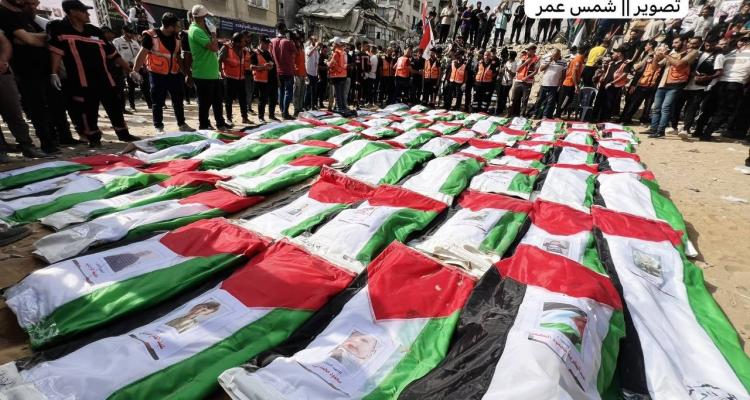
Large crowds and the families of 105 martyrs killed in the Al-Taj Tower Square massacre on Al-Yarmouk Street in Gaza City, Thursday, bid farewell to what remained of the bodies of their loved ones and laid them to rest, after nearly three years spent beneath the rubble of their homes, which were destroyed by the Zionist enemy, in one of the most painful scenes of loss endured by the families of Gaza.
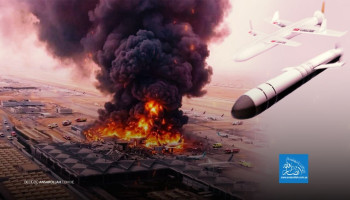
The Al-Taj Tower massacre dates back to October 25, 2023, when aircraft belonging to the Zionist enemy bombed Al-Taj Tower and its surrounding area in the Al-Yarmouk district of Gaza City, in one of the most intense airstrikes to hit a densely populated residential square.
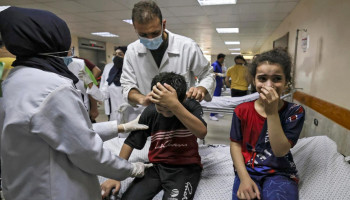
Field reports at the time stated that the bombing targeted Al-Taj Tower, while other sources indicated that around 20 missiles were launched at the tower and the surrounding homes, destroying the building and leveling a number of houses to the ground, while dozens of martyrs and wounded were reported, most of them women and children.
The funeral procession began at 10:00 a.m. from Al-Taj Square toward Sheikh Radwan Cemetery, in the presence of the families of the martyrs and representatives of the organizing bodies. The funeral ceremonies also included a press conference addressing the search and recovery operations that led to the remains of the martyrs being recovered from beneath the rubble.
Among those attending the funeral was Palestinian journalist Mahmoud Haniyeh, standing before the remains of his wife, journalist Doaa Sharaf, and his son Obaida, a child who was only one year and two months old, after the two had remained beneath the rubble of the family home since the massacre took place.
In words in which the pain of a father is intertwined with the loss of a wife, Haniyeh recalls the image of a place that was once alive and crowded with families and children before the Zionist airstrikes turned it into rubble, saying that the massacre did not target buildings alone, but affected the lives of entire families.
Haniyeh says that Al-Taj Square contained dozens of residential units and was one of the most beautiful neighborhoods in the area before its features disappeared under the bombing, adding: “I am talking about children, about lives, about people who were living… This was the most beautiful neighborhood in the area, and this is what remains.”
He points out that around 15 families were completely wiped out in the massacre, with no father, mother, or children left, while most of the other families also suffered losses, with only approximately one or two families escaping complete loss.
Haniyeh recalls the scene in which his son Obaida, who was only one year and two months old, was recovered from beneath the rubble, in one of the most painful moments he has experienced since the massacre took place, stressing that what happened in Al-Taj Square cannot be reduced to casualty figures or the scale of destruction.
He says: “I am talking about children, about families, about people who had lives… Today, there is no family… an entire family has disappeared.”
The journalist stresses that the scale of destruction left by the Zionist bombardment left nothing of the area but rubble, after the enemy forces dropped massive quantities of explosives on the area, turning the homes that had sheltered families and children into ruins, while the victims’ bodies remained buried beneath them for years.
The body of journalist Tasneem Bakheet, a correspondent for Al-Saada Magazine, was also laid to rest. She was killed along with several members of her family in the same massacre, with the bombing wiping the entire family from the civil registry all at once.
Journalist Yousef Sharaf also buried the bodies of his wife, Islam, and his four children: Malak, Malek, Yasmeen, and Nour, along with his father, mother, and a number of his siblings and other family members. Nearly three years after the massacre, the scene encapsulates the scale of the tragedy inflicted by the bombing on entire families.
The burial of the Al-Taj martyrs carries a different meaning for their families. It is not merely a ceremony to bury bodies recovered from beneath the rubble, but the end of a wait that lasted nearly three years, during which the families awaited knowledge of the fate of their loved ones before recovering their bodies and granting them the right to burial.
The funeral ceremonies come as thousands of bodies remain missing beneath the rubble of destroyed buildings across the Gaza Strip. Civil Defense spokesperson Mahmoud Basal confirmed that more than 8,000 bodies remain beneath the rubble, amid a shortage of equipment, heavy machinery, and the fuel necessary for search and recovery operations.