The Intisaf Organization for Women and Child Rights condemned the crimes committed amid the escalation of the Saudi aggression, which affected several governorates and resulted in civilian casualties, including women and children, in the governorates of Al-Jawf and Taiz.
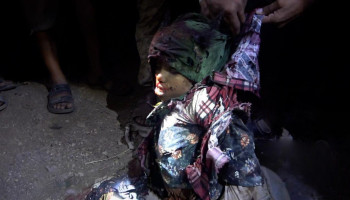
In a statement, the organization affirmed that the latest crimes targeting residential neighborhoods, homes, and civilian objects had increased the documented casualty toll. Airstrikes on citizens’ homes and the government complex in Khab wa Al-Sha’af District in Al-Jawf Governorate resulted in the killing of nine civilians, including five children and a woman, and the injury of seven others, in an initial toll. Meanwhile, shelling of Al-Makhafaf village in Al-Aqroudh area, Al-Misrakh District, in Taiz Governorate resulted in the killing of a child and the injury of his mother. In addition, seven children were injured when a landmine left behind by the aggression, planted inside a citizen’s home in the Al-Afira area of Jabal Habashi District, exploded. These bloody scenes reflect the scale of the grave dangers facing Yemeni families, particularly women and children.
The statement explained that civilian casualties inside their homes and villages, and the transformation of residences that are supposed to provide safety and protection into scenes of death and injury caused by landmines and airstrikes, constitute a flagrant violation of international humanitarian law and a further indication of the continued loss of civilian lives as a result of the aggression against populated areas, posing a direct threat to the lives of the most vulnerable groups.
It stressed that these crimes and violations constitute an extension of the suffering endured by the Yemeni people as a result of the ongoing escalation. The organization affirmed that residential areas and civilian objects must be afforded the protection stipulated under international humanitarian law, foremost among them the principles of distinction and proportionality.
The statement warned that the continued escalation and targeting of civilian areas and facilities exacerbate the suffering of Yemeni families and deepen the psychological, social, and health-related consequences borne in large part by children and women. This comes at a time when these groups need protection, care, and guarantees for their safety and fundamental rights enshrined in international conventions, foremost among them the Convention on the Rights of the Child.
The organization held the Saudi aggression fully legally responsible for the crimes and violations committed against the Yemeni people over more than 12 years.
The statement called on the United Nations, the international community, human rights organizations, and humanitarian organizations concerned with childhood to assume their legal and humanitarian responsibilities and take urgent action to halt the ongoing aggression and blockade, provide effective protection for civilians, and support and intensify mine-clearance programs and the removal of remnants of the aggression to secure homes and roads before residents return to them. It also called for ensuring access to medical and psychological care and assistance for the wounded and those affected.
It further stressed that protecting women and children is not merely a humanitarian commitment, but a legal obligation imposed by the rules of international humanitarian law. The bloodshed of women and children in villages and homes represents a humanitarian outcry that demands urgent international action, going beyond verbal condemnation to practical measures that ensure the protection of civilians, hold those responsible for violations accountable, and guarantee justice and redress for the victims.