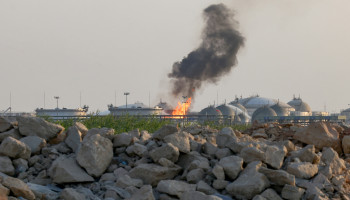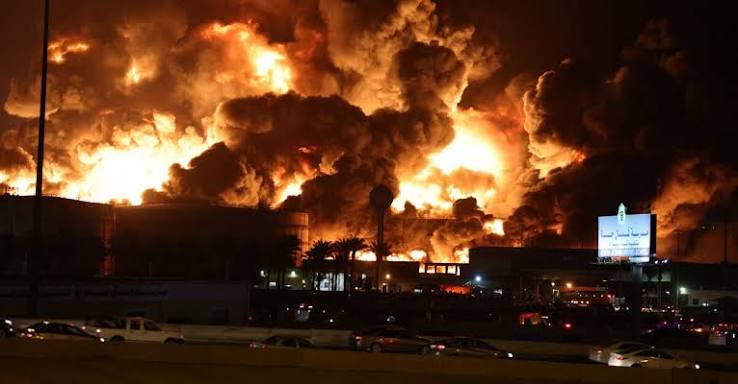
Shares in Saudi Aramco fell on Wednesday after its headquarters sustained significant damage in an attack carried out by the Yemeni Armed Forces last night, while the Armed Forces advised investors to dispose of their shares in the company to avoid further losses.
Reuters reported that Aramco shares fell by 1.6% on Wednesday, affected by the attack, which caused severe damage and fires across several floors of the company’s headquarters in Dhahran, including the office of Chief Executive Officer Amin Nasser.
The Saudi stock market index also fell by 1.7% in Wednesday’s trading, following a night of repeated attacks that also targeted other sites in the Kingdom, including a refinery and Riyadh Airport.
In a related development, the Saba News Agency quoted a military source as saying: “We advise shareholders in Aramco to dispose of their shares in the company so that they do not suffer losses in the coming days,” indicating that the company’s facilities and headquarters would face further attacks.
Earlier this morning, the Armed Forces announced that they would continue their operations against Saudi airports and oil facilities, warning that these operations would have grave consequences.
Earlier on Wednesday morning, Reuters quoted several informed sources as saying that Aramco’s headquarters had sustained severe damage in the attack, which triggered a fire that spread across several floors. The sources indicated that the building’s top three floors, where the office of the company’s CEO, Amin Nasser, is located, had been “severely damaged, with part of the roof collapsing and windows and doors shattered.” They added that the fire broke out on the ninth floor of the building’s southern wing and spread between the sixth and tenth floors.
Another source said that “some functions had been moved to offices outside Saudi Arabia,” adding that the fire was still burning in the early hours of Wednesday morning.
According to the agency, “the headquarters houses an operations center that helps the company oversee onshore and offshore oil rigs, refineries, export terminals, and pipelines extending for thousands of kilometers.”