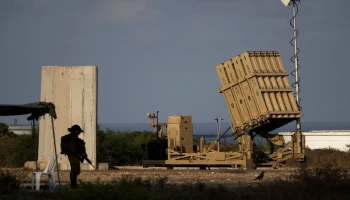

The Israeli army has issued warnings that forces will be unable to provide adequate protection for several newly approved settlements in the occupied West Bank, amid growing tensions over settlement expansion and security concerns, Israeli media reported.
According to the Israeli website Srugim, professional bodies within the Israeli occupation forces issued “exceptional warnings” to senior settlement officials and political leaders following the approval by the political-security cabinet of plans to establish and legalize around 40 new settlements in the occupied West Bank.
A correspondent for Israeli broadcaster i24NEWS reported that the Israeli occupation forces warned they would not be capable of ensuring sufficient protection for a number of the new settlements within a reasonable timeframe.
Settlements reject evacuation requests
The report said the warning was based on operational assessments indicating that, in the event of an attack on one of the settlements from nearby Palestinian villages, Israeli forces would require a long time to reach the area and provide both medical and operational assistance.
It also noted that military authorities directly contacted settlement representatives, requesting the evacuation of several settlement outposts due to security-related concerns.
According to several sources familiar with the matter, settlement leadership in the occupied West Bank rejected the forces' requests and insisted on maintaining the outposts in place, except for a limited number of cases that have not yet been submitted to the cabinet for final approval.
The developments come amid escalating security tensions in the occupied West Bank, alongside continued settlement expansion and growing disagreements within the Israeli establishment over the ability to secure the new settlements.
Hamas on West Bank settlement expansion
The warnings from Israeli occupation forces come amid continued rejection and resistance from Palestinian factions over the rapid expansion of settlements in the occupied West Bank and its potential consequences for the region.
Last week, the Palestinian Resistance movement Hamas warned against the “dangerous escalation” represented by plans announced by far-right Israeli Finance Minister Bezalel Smotrich to construct tens of thousands of new settlement units across the occupied West Bank.
In a statement, Hamas said the ongoing Israeli scheme exposes the true nature of the Israeli occupation government, a system rooted in colonial expansion, land usurpation, ethnic cleansing, and apartheid.
The movement accused Israeli authorities of intensifying land theft, expanding illegal settlements, and tightening pressure on Palestinian communities in blatant violation of international law and UN resolutions.
Settlements will not legitimize occupation, Hamas warns
Hamas stressed that continued settlement expansion would not legitimize the occupation, asserting that "annexation" and Judaization policies would fail to break Palestinian resolve or forcibly displace Palestinians from their land.
The movement also called on Palestinians across all territories and in the diaspora to escalate resistance against the occupation and settler gangs.
The movement also called on the international community to abandon the policy of “silence and complicity” and to take urgent action to halt settlement expansion and "annexation" efforts, while holding Israeli authorities accountable for ongoing violations targeting the Palestinian people, their land, and holy sites.
Hamas’ remarks came in response to Israeli Finance Minister Bezalel Smotrich, who called for permanently removing the divisions between Areas A, B, and C in the occupied West Bank, declaring, “The nation of Israel is coming home, and this time for good.”
Illegality of settlements to start with
Israeli settlements in the West Bank are widely considered illegal under international law.
The main legal basis cited by the international community is the Fourth Geneva Convention (1949), specifically Article 49(6), which prohibits an occupying power from transferring parts of its population into the territory it occupies. The West Bank has been regarded by most states and international bodies as occupied territory since 1967, following "Israel’s" occupation of it during the Arab–Israeli war in 1967.
The United Nations Security Council has repeatedly affirmed this position. Notably, Resolution 2334 (2016) states that Israeli settlements in the West Bank, including eastern al-Quds, “have no legal validity” and constitute a “flagrant violation” under international law.
The International Court of Justice (ICJ) also addressed the issue in its 2004 advisory opinion on the separation barrier, concluding that the settlements were established in breach of international law.
Source:Websites