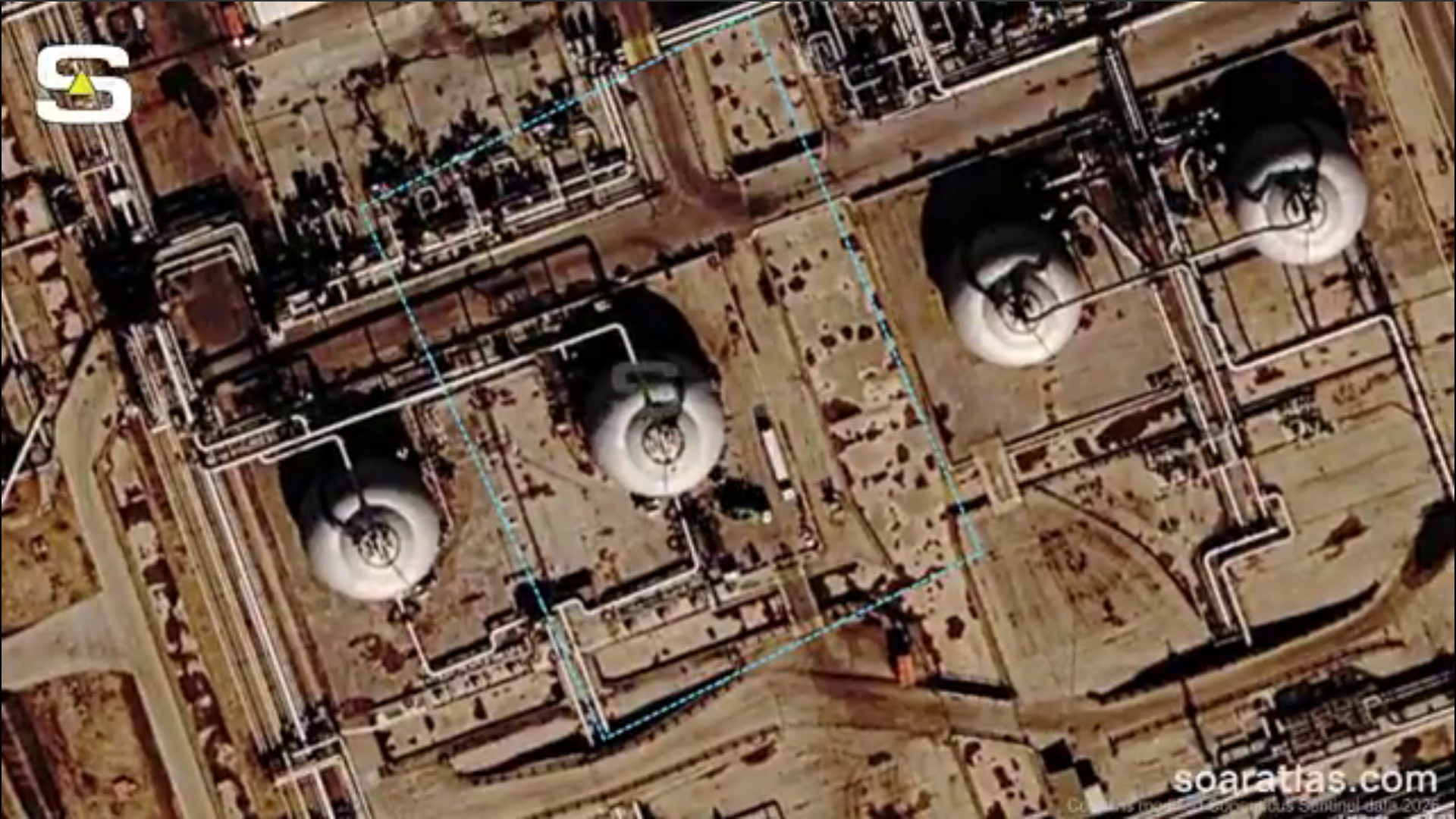
The impact of Yemeni operations against Saudi Arabia and its oil export facilities continues to escalate, marked by a growing reluctance among international companies to engage with Saudi facilities covered under the "blockade for blockade" equation.
According to Reuters, German lubricants producer Fuchs has suspended operations at a facility in Yanbu after it sustained severe damage and caught fire last Saturday.
A spokesperson for the German company was quoted by the agency as saying: "We relied on the information provided by our Saudi partner and cannot provide any additional details, and no employees were injured." This statement points to Saudi efforts to conceal the actual outcomes of Yemeni operations even from its partners, underscoring significant damage that Riyadh is withholding.
While Reuters noted that "the company will maintain customer supplies through alternative production and supply arrangements until reconstruction plans for the facility are drawn up," observers believe that no alternative routes will succeed given the expanding scope of Yemeni equations. This leaves the Saudi regime with a single option: yield to the Yemeni will, halt the aggression, and lift the blockade instead of stalling and evading responsibilities.
Meanwhile, maritime data and international reports revealed a noticeable decline in crude oil loading operations at the Saudi port of Yanbu amidst the ongoing enforcement of the Yemeni Armed Forces' decision to impose a naval blockade on Saudi ports. At the same time, indicators showed that some tankers have resorted to concealing their movements by turning off their Automatic Identification Systems (AIS)—a development highlighting the broadening repercussions of Yemeni measures on Saudi oil exports.
Reuters reported, based on maritime tracking data, a drop in crude oil loadings from Yanbu port following the Yemeni Armed Forces' announcement of the naval blockade on Saudi Arabia.
The news agency quoted the firm AXSMarine as stating that "the number of oil loading voyages from Yanbu port dropped to 16 during the past week, compared to 35 voyages in the preceding week," confirming a sharp decrease in the pace of shipping traffic from one of Saudi Arabia's primary oil export terminals.
Additionally, Reuters cited Vortexa, a energy intelligence firm specializing in tracking oil movements, reporting that "covert loading operations from Yanbu port saw a noticeable increase, with some oil tankers switching off their Automatic Identification System (AIS) transponders during loading."
Turning off tracking devices exposes these vessels to being targeted. The Saudi regime bears full responsibility for the targeting of any vessel that deliberately turns off its tracking system, as resuming oil exports ultimately requires ending the aggression and lifting the blockade on Yemen, rather than resorting to procrastination, escalation, and smuggling.
These indicators follow days after the Yemeni Armed Forces announced the initiation of a naval blockade on Saudi ports and the targeting of vessels linked to Saudi oil exports.