
Ansarollah Official Website — Report by Wadeea Al-Absi
Driven by an unwavering belief in the justice of their cause, the Yemeni people show no signs of fatigue or defeatism. This resolve is demonstrated weekly in the million-man rallies called for by the leader, Sayyed Abdulmalik Badr al-Din al-Houthi—gatherings dictated by religious duty and humanitarian values. These demonstrations have evolved into a weekly spectacle reflecting popular cohesion around the national stance, affirming steadfastness against Saudi and American aggression, and renewing full authorization for the leadership and military operations.
Under the banner "Blockade for Blockade, Escalation for Escalation," the rallies delivered unequivocal messages. The underlying premise is clear: no new military or naval alliances will alter Yemeni realities or compel the nation to accept external dictates. Any alliance founded on false pretenses—aimed at perpetuating aggression, maintaining the blockade, or plundering Yemen's resources—fails to deter a population tempered by years of war and siege. The long experience with war and blockade has cemented a firm conviction that such international groupings are driven purely by strategic and political ambitions against Yemen's sovereignty.
A Renewed Popular Referendum
Far from being mere symbolic events, these turnouts serve as a continuous popular referendum rejecting foreign intervention and economic coercion. The message to nations considering joining a new coalition is direct: betting on breaking the popular will is a losing proposition. The policies intended to exhaust society economically have only reinforced the conviction that sovereignty and freedom are non-negotiable.
Yemen Imposes a New Reality
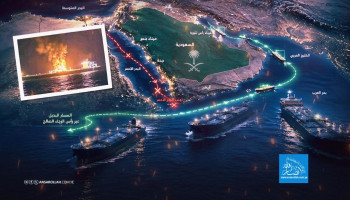
The massive rallies, responding to Saudi announcements of a new alliance following the collapse of previous coalitions, signal the emergence of unprecedented equations. The decision to enforce a ban on Saudi-bound navigation was not a measure taken lightly, but a direct response to over twelve years of a punishing blockade.
These developments indicate that Yemen's actions are reshaping the region, reducing the influence of powers accustomed to unilateral dominance. Washington’s push for Riyadh to establish a new maritime alliance under the guise of protecting navigation in Bab al-Mandab Strait highlights American recognition of its own strategic overstretch. By maneuvering proxy actors to the forefront, Washington attempts to obscure the limits of its own influence.
American Reliance on Proxies
Since the onset of the aggression against Yemen, the United States has operated behind the coalitions led by Saudi Arabia, preferring to prompt regional allies to act on its behalf. Today, amid renewed efforts to assemble a new coalition following previous setbacks, Washington avoids leading overtly.
Instead, it operates through regional partners while remaining the central architect behind the scenes. Analysts view this tactic as an attempt to shift the operational burden and risks onto regional parties in a conflict with highly uncertain outcomes.
Precedents of Attrition
Previous initiatives, such as the US-led Operation Prosperity Guardian, faced severe challenges and failed to alter the strategic balance in the Red Sea. Subsequent European initiatives, including Operation Aspides, similarly operated under tight constraints, reflecting the high stakes and potential for prolonged military attrition in the region.
Over time, Yemen’s military capabilities and defensive posture have developed significantly. Advancements in defense manufacturing, strategic planning, and intelligence collection have increased operational effectiveness. Consequently, Yemen views the United States as the primary adversary in any hostile activity, while asserting that any state joining military actions against its territory or national interests will face direct consequences.
Proportional Response and Strategic Equations
Yemeni authorities reiterate that their actions remain within the framework of national defense and sovereignty. However, any attempt to bypass the declared naval restrictions or escalate military operations against the country will be met with calculated responses.
Should further escalation occur, countermeasures will not be limited to restricting access through the Bab al-Mandab Strait for participating nations; key strategic assets of the principal coalition actors will remain legitimate targets under the principle of reciprocity and national defense.