
Ansarollah Official Website — Report by Wadeea Al-Absi
Following the foundational statement by the leader on the occasion of the New Hijri Year—calling for readiness to reclaim national rights—and the subsequent executive statement by the Armed Forces establishing the "Blockade for Blockade" equation, regional developments entered a rapidly accelerating phase. International think tanks and economic analytical firms quickly moved to assess the potential fallout, reaching a consensus that an escalating confrontation between Yemen and Saudi Arabia threatens severe consequences for the Kingdom, potentially unwinding years of economic stability.
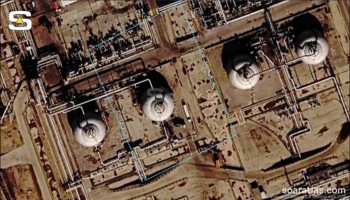
This assessment has been further reinforced by a series of high-impact operational measures implemented by the Armed Forces. The enforcement of a naval blockade targeting Saudi shipping altered long-standing operational assumptions in the region. This was accompanied by direct strikes on vessels attempting to bypass the navigation ban, as well as targeted operations against Abha Airport, Aramco oil facilities in Jizan and Yanbu, and the East-West crude pipeline across the Kingdom.
Observers note that these coordinated actions present Riyadh with a difficult dilemma: either accommodate Yemeni demands regarding economic and humanitarian concessions or enter a period of prolonged attrition that risks eroding the Kingdom's economic status. Analysts contend that despite its military capabilities, Saudi Arabia remains structurally vulnerable to targeted disruptions against key economic infrastructure.
Saudi Ports Lose Strategic Advantage
From the initial days of the naval restrictions, international shipping entities responded with caution, evaluating the risks associated with Persian Gulf and Red Sea transit. The situation has introduced major uncertainties for Saudi Arabia’s long-term economic plans, which rely heavily on oil revenues and foreign investment.
A report by The Wall Street Journal highlighted that military escalation puts the Kingdom's ambitious projects at risk of direct targeting, threatening an outflow of foreign capital. Analysts cited in the report noted that disruptions near key developments—such as NEOM or financial districts in Riyadh—could damage the Kingdom's security profile and impact the implementation timeline of Vision 2030.
Similarly, an assessment by The Washington Institute for Near East Policy noted that naval restrictions rapidly created severe pressure on the Saudi economy, suggesting that leadership in Riyadh remains concerned about a wider breakdown of the truce and may seek financial compromises to prevent attacks on energy infrastructure. Foreign Policy magazine remarked that Yemen has established an effective maritime veto near the Bab al-Mandab Strait, making Saudi national security and economic stability contingent on reaching a broader political settlement. Meanwhile, shipping journal Lloyd's List emphasized that threats to Saudi navigation have altered maritime security dynamics in the Middle East, elevating risk premiums for Saudi-linked trade routes and diminishing the strategic advantage of its Red Sea ports.
Economic analyst Dr. Abdel-Hay Zalloum underscored the difficulty of executing major infrastructure initiatives under persistent security risks. He noted that multinational technology firms and international investment funds are unlikely to commit massive capital to projects like NEOM, Qiddiya, or Red Sea luxury resorts as long as these areas remain within the operational range of Yemeni drones and missiles.
The conviction reflected by Yemeni operations
In response to the declared posture and military operations, maritime security firms and marine insurers immediately reassessed risk levels in the Red Sea and Gulf of Aden, raising advisories for Saudi-affiliated vessels. This rapid market reaction reflects a growing international recognition of Yemen's ability to impact one of the world's most critical maritime corridors—a dynamic previously demonstrated during operations against Israeli-linked shipping in the Red Sea and the disruption at the Port of Umm al-Rashrash (Eilat).
Given that Saudi ports along the Red Sea coast are geographically closer than targets further north, Yemeni ballistic missiles and unmanned aerial vehicles (UAVs) operate with reduced transit times and higher precision margin, further complicating defense calculus for the Kingdom.
A nation at the mercy of stroke of luck
Field data suggests that the expansion of Yemeni military capabilities over years of conflict has introduced new operational realities. Saudi Arabia's heavy dependence on oil exports and secure maritime lanes leaves its economy exposed during periods of prolonged escalation, granting Yemen an operational advantage in a conflict of attrition centered on low-cost, high-efficiency military technology.
A report by German broadcaster DW noted that low-cost drones and cruise missiles have exposed defensive vulnerabilities across the Kingdom's critical infrastructure, making key facilities difficult to fully shield from saturation strikes.
At the mercy of a twin drain
The ongoing escalation places Saudi Arabia at a critical juncture, facing dual pressure from maritime trade disruptions and potential damage to vital energy facilities. These dynamics pose significant hurdles to the realization of its long-term investment goals.
British political analyst and Editor-in-Chief of Middle East Eye, David Hearst, noted that the broader maritime confrontation involving US and British forces has granted Yemen unprecedented political and military leverage. Consequently, Riyadh recognizes that participating in renewed military actions or enforcing economic restrictions against Yemen risks provoking direct strikes on its own sovereign economic assets, setting its development goals back by years.
Growing Strategic Challenges for Riyadh
Reflecting on the military capabilities accumulated by Yemeni forces in recent years, Israeli media outlets analyzed the implications of a prolonged conflict with the Kingdom. The Jerusalem Post reported that Yemeni forces possess the operational capacity, missile technology, and manpower required to sustain a multi-front, long-term war of attrition encompassing land, naval, and aerial domains.
According to the publication and regional analysts, the Armed Forces command a substantial regular force alongside large reserve units, institutional training programs, and extensive tribal support networks, providing the human resources necessary to sustain extended operations.
The dilemma besieges the Saudi regime
The continuation of economic restrictions on Yemen or further rounds of military escalation carry serious consequences for Saudi Arabia's economic and social stability. Disruption to supply chains or critical infrastructure directly impacts developmental planning, reducing capital allocation for major projects.
On a societal level, heightened conflict undermines public perception of stability. Unaccustomed to prolonged wartime disruptions, domestic panic buying was reported across major Saudi commercial centers following recent strikes, leading to temporary supply shortages in local markets while official responses remained limited. Observers note a stark contrast between the resilience of Yemeni society—tempered by years of economic hardship and siege—and the vulnerability of Saudi Arabia’s consumer-driven environment.
A fragile nation incapable of enduring the slightest shock
Strategic evaluations conclude that Saudi Arabia operates as a high-value, consumer-centric economy highly sensitive to security disruptions that impact its reputation as a safe haven for international capital. In contrast, Yemen has adapted to severe geopolitical and economic conditions, expanding its domestic military production amidst ongoing conflict and encirclement.
From a cost-benefit perspective, consensus holds that Saudi Arabia risks vastly more—in terms of infrastructure, global investment credibility, and financial stability—than Yemen, which has already absorbed years of comprehensive warfare. Consequently, analysts describe persistent attempts to deny Yemeni demands as a zero-sum calculation that favors de-escalation, particularly as Yemeni forces update target banks within the Saudi depth with precise coordinates, rendering Western defense systems like the Patriot and THAAD vulnerable to saturation tactics.
Ultimately, with an expanding Yemeni arsenal and the inability of opposing coalitions to enforce a decisive military solution, addressing humanitarian requirements, lifting economic restrictions, and pursuing a negotiated settlement remain the primary avenues for Riyadh to avoid further economic disruption.