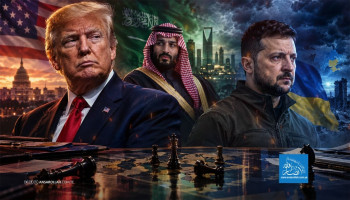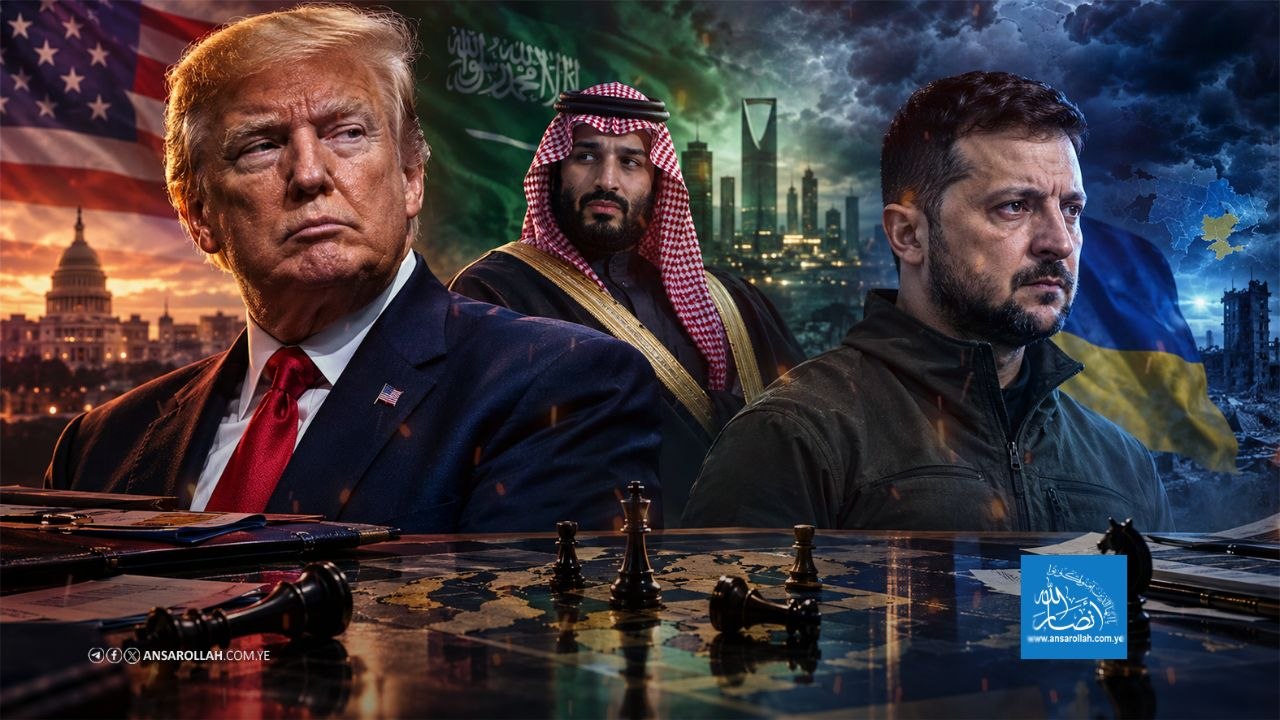
In the arena of international politics—and American politics in particular—there are no eternal friendships or sacred covenants. Interests shift, loyalties are bought and sold, and allies are offered up as sacrifices on the altar of short-term tactics. From this perspective, the dramatic shift in the American position toward the Russia–Ukraine war can be understood as President Donald Trump’s search for a cheaper and easier way out through reconciliation with Moscow, rather than an open confrontation with a regional axis that has become a genuine source of pressure on Washington. The retreat toward an understanding with the Kremlin, the threat to cut intelligence and satellite support for Ukrainian drones, and even the threat to replace President Volodymyr Zelensky himself were less the product of a carefully considered strategic decision than a response to narrow pragmatic calculations. The underlying premise is that America—having failed to break Tehran’s resolve in the Strait of Hormuz, and having suffered a similar setback in Bab el-Mandeb, where Yemeni strikes halted Saudi oil exports and disrupted air traffic in the Kingdom—is now seeking an easy victory on another front, even if Ukraine, a vulnerable ally, must pay the price. This is particularly significant as oil prices continue to rise, affecting American markets amid uncertainty over Trump’s commitments to reopen the Strait of Hormuz. Under these circumstances, returning to Russian oil becomes less costly.
Failure in Hormuz and Bab el-Mandeb: The Hidden Condition Behind Reconciliation with Moscow
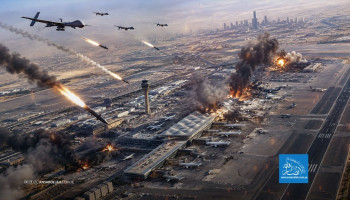
The American shift toward Russia did not emerge in a single moment. Rather, it came as the culmination of a series of successive setbacks in confronting regional actors that have demonstrated their ability to impose their own terms. In the Strait of Hormuz, Iran has continued to wield the threat of economic strangulation, while Washington has found no way to break its hold. In Bab el-Mandeb, the Yemeni Armed Forces have demonstrated that they can strike deep inside Saudi territory and disrupt vital energy and aviation routes, exposing the fragility of American deterrence against adversaries whose capabilities cannot be measured solely by conventional balances of power.
Here, the equation becomes clear: when the dominant power fails to impose its will in two strategically vital theaters, seeking an exit through a third becomes a tactical necessity. In this context, reconciliation with Russia is less a strategic concession than a deal to divide spheres of influence: Washington closes the Ukraine file, while Moscow takes responsibility for managing the pace of conflict in other areas of pressure and securing energy supplies at acceptable prices. Zelensky, meanwhile, was nothing more than a bargaining chip in this exchange, just as smaller allies in other regions had been before him.
Zelensky’s Lesson: Will Mohammed bin Salman Take Heed?
This raises the fundamental question: if this is the fate of a European head of state who enjoys extensive Western support, what does it mean for Gulf allies that have built their security calculations around an American umbrella that could shift at any moment?
Bin Salman has watched as Zelensky was left alone to face Russian missiles after once being the star of speeches in Congress, and as he was transformed from a pivotal ally into an obstacle to be bypassed. The same applies to Riyadh. Since the beginning of the aggression against Yemen, the Kingdom has operated more within the orbit of American interests than in pursuit of an independent national project. Yet when Yemeni strikes targeted oil facilities and air traffic, Riyadh found nothing but complete American silence—as though Washington were telling it: this is your battle alone; we are here only to serve our own interests.
Riyadh: A Tool, Not an Independent Project
What reinforces this argument is that, since establishing its strategic relationship with Washington, the Kingdom has failed to build its own regional project. Instead, it has continued to be used as a tool for implementing external agendas, some American and others Israeli. When weapons are purchased, bases are opened, and proxy wars are fought, the natural outcome is that a state is transformed from an actor into an object of others’ actions, and from a partner into a subordinate. Thus, when American priorities change, an ally finds itself facing its adversaries directly, without cover or guarantees.
Lessons from Kyiv to Riyadh
What happened to Zelensky is not an isolated incident but, an enduring pattern in American policy: when crises intensify, weaker allies are offered up as sacrifices to facilitate reconciliation with more powerful adversaries. Saudi Arabia—with its geopolitical position and oil weight—is not immune to the same fate unless it redefines its national project independently of reliance on American protection, which events have shown to be an illusion.
More importantly, Riyadh must move quickly to resolve the Yemen issue before events spiral out of control. The wise person learns the lesson before their turn comes in the next chapter.